
Committee hears testimony on H.753 to limit utility disconnections and track outages
Get AI-powered insights, summaries, and transcripts
Sign Up Free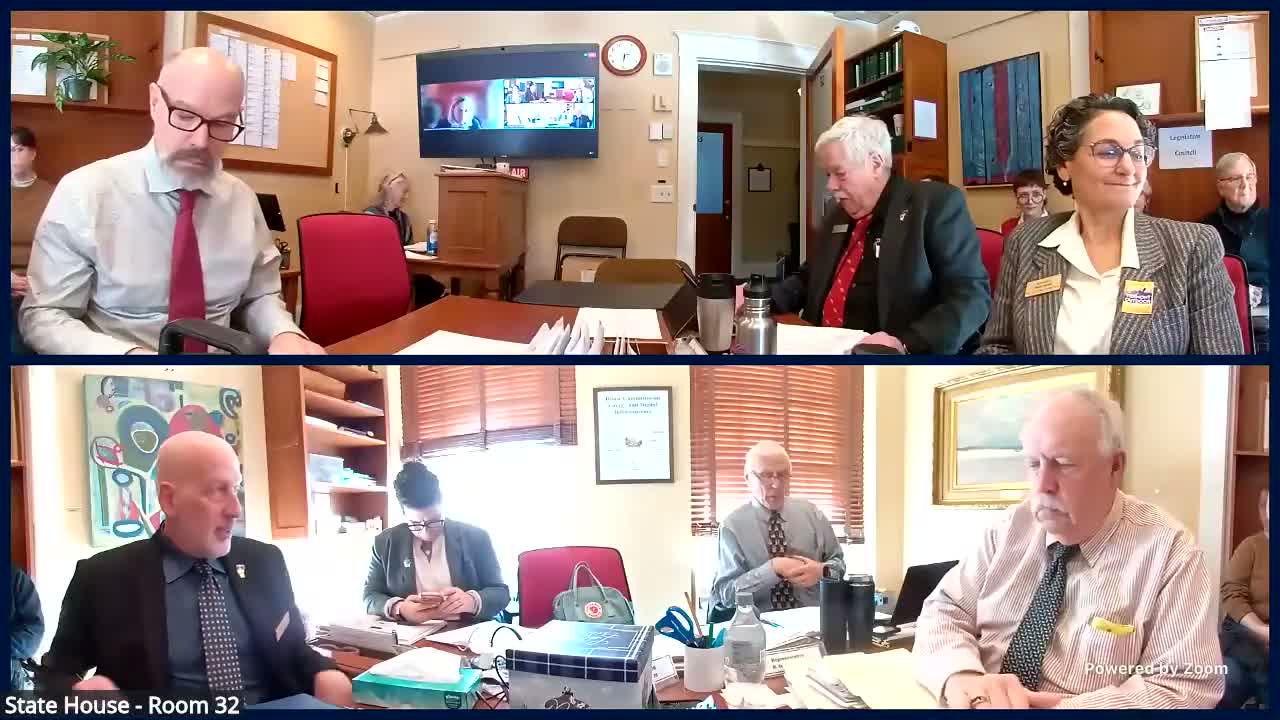
Summary
At a Feb. 5 House Energy and Physical Infrastructure hearing, advocates and service providers urged support for H.753, a bill that would require tracking utility disconnections and offer limited protections for vulnerable households; witnesses cited rising arrears, individual hardship cases, and gaps in current assistance programs.
The House Energy and Physical Infrastructure Committee heard public testimony on Feb. 5, 2026, on H.753, a bill intended to limit utility disconnections and require utilities to track disconnection incidents as a performance metric.
Why this matters: Witnesses told the committee that disconnections cascade into other harms — lost refrigeration for medication, inability to charge phones and work devices, and added stress for families with young children — and argued current nonprofit supports cannot meet rising need. The bill aims to make disconnections visible and encourage utility practices that prevent immediate shutoffs for vulnerable customers.
Advocates’ testimony: Richard Foote, a witness supporting the bill, described local assistance efforts through the Joint Urban Ministries Project and his church’s emergency fund and said national data show deep need: “In June, July 2025, 72,000,000 Americans were in arrears on their utility bills. That’s 1 in 5 Americans,” he told the committee. Foote read three anonymized cases: a young mother facing a $1,377 electric bill, another single mother who needed $497 to avoid shutoff, and a 70‑year‑old veteran who required a $3,300 dental procedure beyond his means. Foote said community groups’ one‑time help can prevent imminent shutoffs but cannot address systemic shortfalls.
A climate‑justice group framed the bill in a broader ratepayer context. Nika Riddlebarger, co‑director of 350 Vermont, noted prior legislative work (House Bill 668 in 2024 folded into Act 142) and a Public Utilities Commission (PUC) study that declined to recommend a statewide repair program. She said H.753 would address rising disconnections and provide targeted protections for the most affected Vermonters, including households relying on electricity for medical needs.
Child‑focused data: Ellen Amstutz, director of the Vermont Parent Child Center Network, said the network’s 15 centers served more than 20,000 families last fiscal year and experienced a 28% increase in requests for concrete supports, with utility bills representing a sizable portion. She gave center‑level examples (one center provided about $8,000 last year to prevent disconnections; Lamoille centers helped 15 households with roughly $3,300) and urged the committee to pair statutory protections with increased funding for short‑term assistance so families with children under 6 are not forced to choose between heat, food, or medicine.
Committee reaction and questions: Committee members generally expressed sympathy for the witnesses’ stories but cautioned that H.753 is a narrow, incremental measure within a larger affordability problem. Members discussed the bill’s practical scope — it targets regulated utilities — and flagged that unregulated heating fuels (fuel oil) are not covered. One member noted regulated utilities receive a guaranteed rate of return and suggested performance metrics should include outreach and uptake of assistance programs, not only raw disconnection counts. Staff described ongoing efforts to negotiate payment plans with utilities and help customers access existing assistance programs.
What did not happen: The committee did not take a vote on H.753 during this session. The chair said staff would make adjustments and the committee would proceed offline.
The next step: Committee members signaled interest in refining the bill’s metric language, clarifying which utilities and fuel sources are covered, and considering complementary funding for short‑term supports. The committee closed the public portion with no formal action recorded.