
StubHub tells Vermont committee deceptive-site and speculative-ticket bans help consumers; warns price caps push sales to fraud
Get AI-powered insights, summaries, and transcripts
Sign Up Free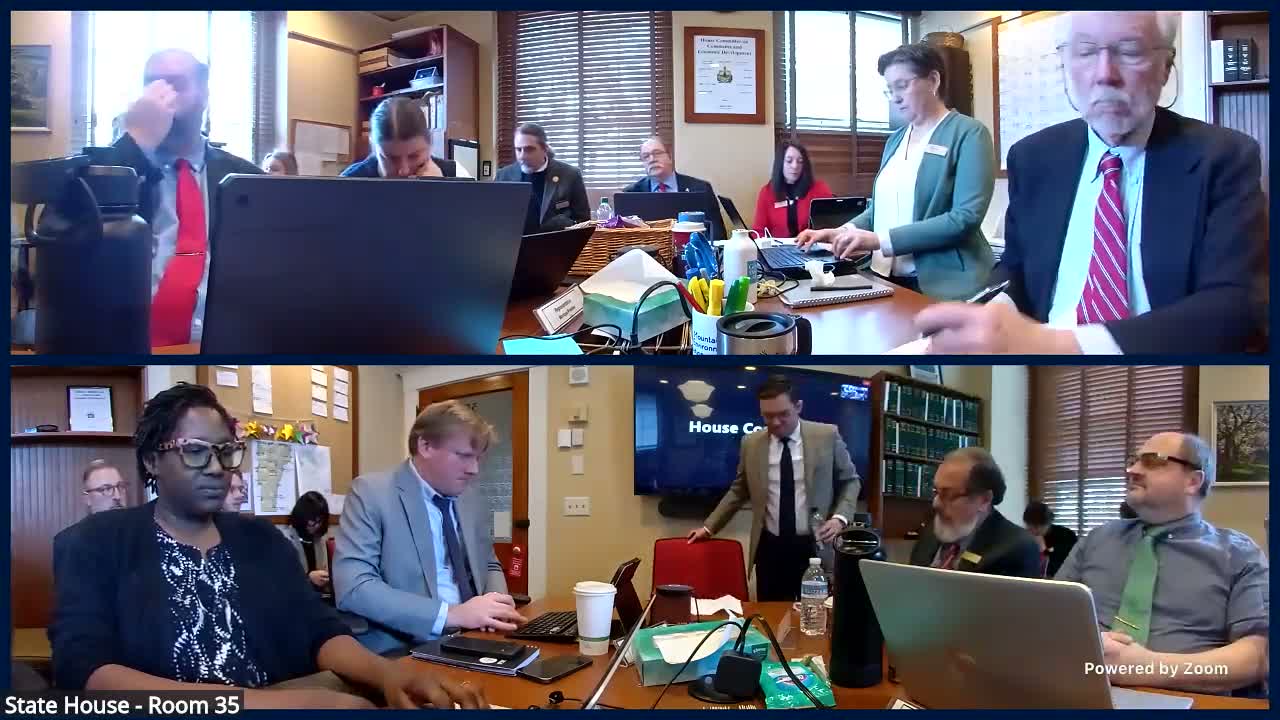
Summary
A StubHub representative told the Vermont House Commerce Committee they support banning deceptive websites and speculative sales and offered model language, but opposed price-cap provisions that they say would push transactions into unregulated channels and increase fraud.
A representative of StubHub testified Feb. 6 before the House Committee on Commerce & Economic Development, supporting parts of H.512 that target deceptive websites and speculative ticket sales while urging the committee not to adopt strict price-cap provisions.
The unnamed company witness described StubHub as "an eBay for tickets" that connects buyers and sellers and said the company does not own tickets or set sellers' prices. The witness told the committee StubHub had about 6,000 users in Vermont last year and said more than half of buyers for Vermont events came from out of state.
On deceptive websites and speculative tickets, StubHub said it generally supports prohibitions aimed at impersonating official sellers and at listings for tickets not in "physical or constructive possession." "We support provisions like that in the bill," the witness said, while asking the committee to narrow deceptive-URL language to avoid unintended limits on legitimate marketplace advertising.
StubHub raised an objection to price-cap ("price-gap") provisions. The company's representative argued that capping resale prices tends to move transactions to unregulated places — social media, classified sites — where fraud rises. "When you put the price caps in place, you're not changing the market, you're moving the market," the witness said, and pointed to examples (Ontario, Massachusetts) where price caps were later repealed or altered.
The company described its fraud-prevention practices and remedies: a 0.2% rate of "orders that ever have a problem at the door" in North America, holding seller funds until buyers are admitted, and offering a 100% refund or 120% voucher when entry fails. The witness also explained verification limits: primary ticketing platforms (e.g., Ticketmaster) sometimes restrict transfer data and block secondary platforms from directly verifying ledger information, a technical and contractual barrier that complicates policy approaches based on primary-source verification.
Committee members pressed StubHub on disclosure and labeling — urging clearer statements that a listing on a resale platform is a resale and that front‑end displays ("50 tickets left") be explicit about whether the count is only what appears on the resale site. StubHub offered to provide model statutory language (citing Connecticut and Colorado examples), customer‑service correspondence, and additional data for the committee's drafting work. No vote was taken; the committee recessed for lunch and asked for follow-up materials.
Closing note: StubHub volunteered to supply example legislative language and data; the committee will continue deliberations and solicit venue and consumer‑protection input before making drafting decisions.