
Metropolitan Mosquito Control District warns of record West Nile year; shifts tire pickup to drop-off events
Get AI-powered insights, summaries, and transcripts
Subscribe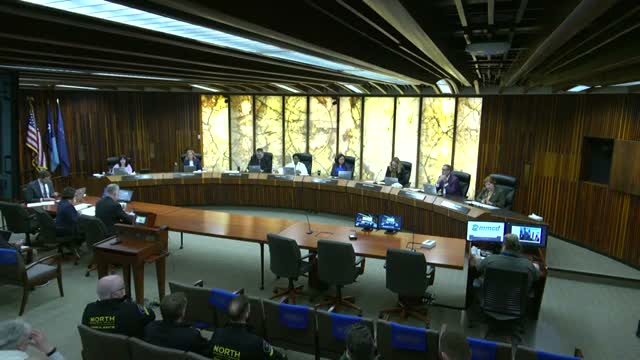
Summary
At a Feb. 5 Hennepin County committee meeting, the Metropolitan Mosquito Control District reported a record West Nile year in the district and outlined program changes including expanded drone use, large-scale larval control and a shift to community tire drop-off events to reduce staff burden.
The Metropolitan Mosquito Control District told Hennepin County commissioners on Feb. 5 that 2025 was a record year for West Nile virus and laid out operational changes intended to reduce disease risk and improve program sustainability. "West Nile is a mosquito borne disease and really, highlights the important public health mission that Metropolitan Mosquito Control District carries out," Executive Director Daniel Huff said.
Alex, a district operations lead, said the district recorded 45 human West Nile cases across its service area in 2025 and that Hennepin County alone had 16 confirmed cases, nine of which required hospitalization and one of which resulted in death. The district reported an 18 percent positivity rate in mosquito samples and said disease activity peaked earlier than normal — in July — with a midsummer spike in cattail mosquitoes.
Officials described an expanded focus on larval control as the safest, most targeted way to reduce disease-carrying populations. Alex told the board the district treated more than 240,000 acres by helicopter, 12,000 acres by drone (a record year for drone use), and 16,000 acres by hand or backpack; adult ground-based treatments covered about 1,400 acres and are reserved for areas with elevated West Nile risk. "Larval control really is our focus," Alex said, noting that targeting mosquitoes in standing water minimizes impacts on non-target species.
The presentation also highlighted program changes aimed at reducing staff strain and improving cost-effectiveness. The district said it collected more than 22,000 tires last year — a heavy logistical and safety burden for staff — and will shift from door-to-door tire pickups to scheduled community drop-off events across the district (several events early and late in the season plus an October districtwide event).
Commissioners asked about interagency coordination and the epidemiology of West Nile. Daniel Huff said the district coordinates with the Minnesota Department of Natural Resources and federal agencies for surveillance in public lands and that Hennepin County Public Health serves on the district’s technical advisory board. In response to questions on whether a "tipping point" had been reached, staff explained that West Nile cycles with bird reservoirs and that the goal is suppression rather than eradication.
The district asked residents to use its online 'submit a tip' form during high mosquito activity, pointed to updated online maps showing wetlands and past treatments, and announced that seasonal hiring applications open next week.
What happens next: commissioners were sent city-level summaries of last year’s activity and district staff said they will announce tire drop-off locations when finalized. The district will expand community outreach and research efforts in 2026 to monitor species, resistance and non-target impacts.
Sources: Metropolitan Mosquito Control District presentation to Hennepin County Operations & Budget Committee (Feb. 5, 2026).