
Saint Tammany council splits on Mosquito Abatement appointments after heated public testimony
Get AI-powered insights, summaries, and transcripts
Subscribe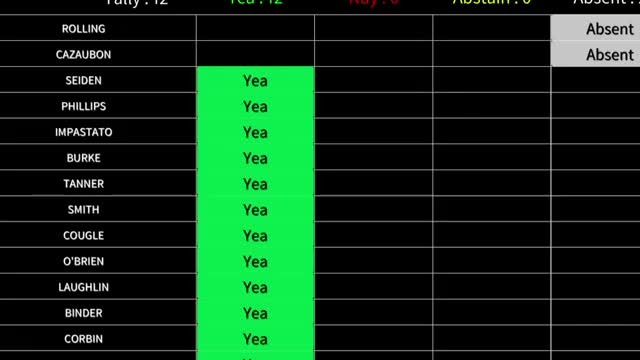
Summary
Council debated reappointments and new nominees to the parish Mosquito Abatement District after extensive public testimony about scientific expertise, fiscal management and past legal disputes; one nominee (Bill Yacht) was appointed and the second seat was postponed for one month.
The Saint Tammany Parish Council on Feb. 5 considered contested appointments to the parishwide Mosquito Abatement District amid sharp public testimony over fiscal oversight, travel expenses and technical expertise.
Vicky Bridal George, chair of the Mosquito Abatement District board, urged the council to reappoint Glenn Boyer and emphasized his technical background and conference attendance as evidence of relevant expertise. “Glenn is extremely qualified for this position,” Bridal George said, describing a 36‑year naval oceanographic career and board contributions (SEG 556–607).
Several residents and technical experts also spoke. Glenn Boyer introduced himself and cited his service and learning to help the district (SEG 612–630). Jamie Segura, a Covington resident, urged keeping scientists on the board, saying “What better place to have too many scientists than on a board that works hard to control and address the mosquitoes that are in this parish” (SEG 635–656). Vicki Taylor, a retired supervisory entomologist for St. Tammany with 36 years at the agency, warned of public‑health risks and argued the board must include “strong, well informed, and highly competent directors” (SEG 721–761).
Other speakers, including Dr. Andrew Benson and council members, framed the issue as fiscal as well as technical. Benson supported appointments but urged fiscal transparency, while Councilman Laughlin called the district “overfunded” and cited prior Louisiana legislative auditor findings and litigation tied to council oversight (SEG 772–795; SEG 841–856). Council members repeatedly referenced a figure that the district collects about $10,000,000 a year in taxes as they debated whether business experience should be added to board oversight (SEG 842–843).
After nominations and two rounds of voting, Bill Yacht received the plurality of council votes and was appointed to one seat. The clerk recorded: “Bill Yacht received 12 votes” and the council noted that Bill Yacht would be appointed once the resolution was adopted (SEG 1169–1173). Votes for the other seat were split among Monica Horn and Glenn Boyer; council members then moved to appoint David Billotte in a separate motion that carried, and postponed discussion of a remaining seat for one month to allow absent council members to participate (SEG 1169–1246).
Council debate emphasized competing priorities: maintaining technical, science‑based mosquito control versus adding business or fiscal oversight to better manage public funds and travel costs. Councilman Coogel and others argued business experience matters amid what they described as a fiscal crisis; other members and multiple public speakers countered that scientific and technical knowledge is essential to protect public health (SEG 952–981; SEG 1005–1016).
The council did not take further structural action on the district during the meeting; members instead moved forward with the appointments and set a follow‑up for unresolved seats next month. The matter is scheduled to return to the council agenda for a final vote on the remaining seat.
What happens next: the appointed commissioners will take office as provided by the resolution; the council left one seat open and postponed a second vote for one month to allow additional members to participate and to permit further review of nominees.