Bill would raise local levy caps and change LEA formula; superintendents warn of uneven effects
Loading...
Summary
Staff briefed a substitute to HB 21‑16 that raises the levy rate used to calculate enrichment levies to $3 per $1,000 (from $2.50) beginning in 2028 and adjusts the LEA threshold and assumed levy rate; state and local officials said the bill may help many districts but risks unintended outcomes for property‑poor and levy‑fatigued districts.
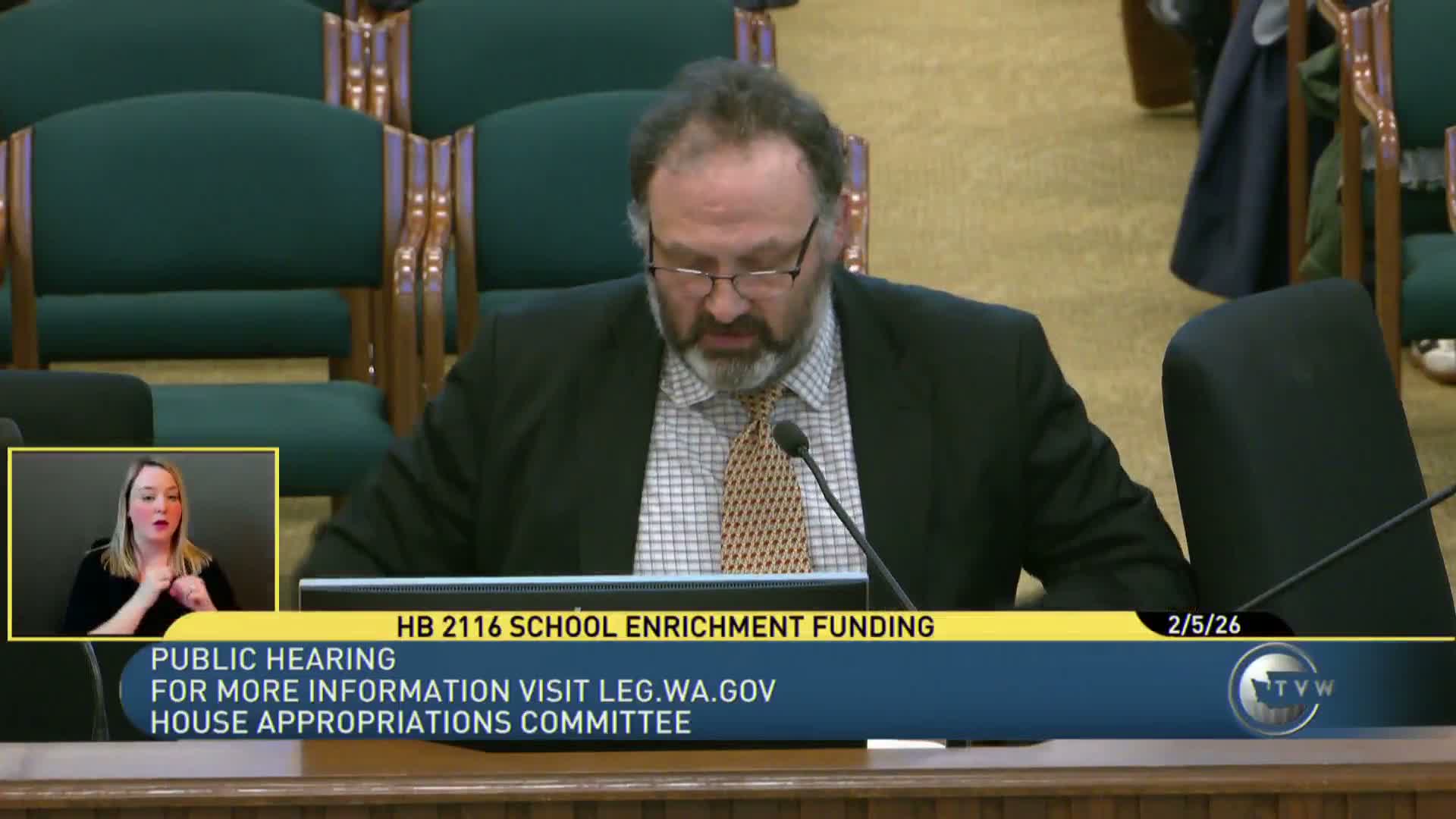
James Mackeson, committee staff, briefed the committee on the proposed substitute to HB 21‑16 that adjusts school enrichment levy authority and local effort assistance (LEA) formulas. The substitute raises the maximum levy rate used in some calculations from $2.50 to $3.00 per $1,000 assessed value beginning in calendar year 2028 and changes the LEA assumed rate from $1.50 to $2.00, with a new per‑pupil LEA threshold of $2,825 from 2028 onward and a switch back to Seattle CPI for inflation indexing.
OSPI’s fiscal note projected the policy is roughly revenue neutral in the near four‑year outlook, with modest district‑level impacts based on current voter‑approved levies. Staff provided district‑by‑district projection files showing about 33 districts could receive more LEA funding under the substitute and about 59 fewer, depending on levy choices and property values.
Superintendents from smaller and property‑poor districts strongly cautioned that the bill could widen inequities if the changes are not carefully implemented. Mount Adams superintendent Kurt Gualianoni said his district receives roughly $300,000 from local levies at current $1.50 rates and could not realistically expect voters to approve increases to $2 or higher; he warned the community would lose athletics and enrichment if LEA shifted downward.
Proponents and school officials urged the committee to keep working on a package that preserves LEA as an equity tool while increasing levy authority where appropriate. OSPI staff recommended clarifying language to ensure the bill applies only to new levies and asked that implementation dates be reconsidered so districts can plan budgets.
The committee requested further district‑level modeling and asked staff to work with OSPI and stakeholders to refine start dates and clarifying language before further action.