
Permitting reform bill advances; contractor rating provision draws industry pushback
Get AI-powered insights, summaries, and transcripts
Subscribe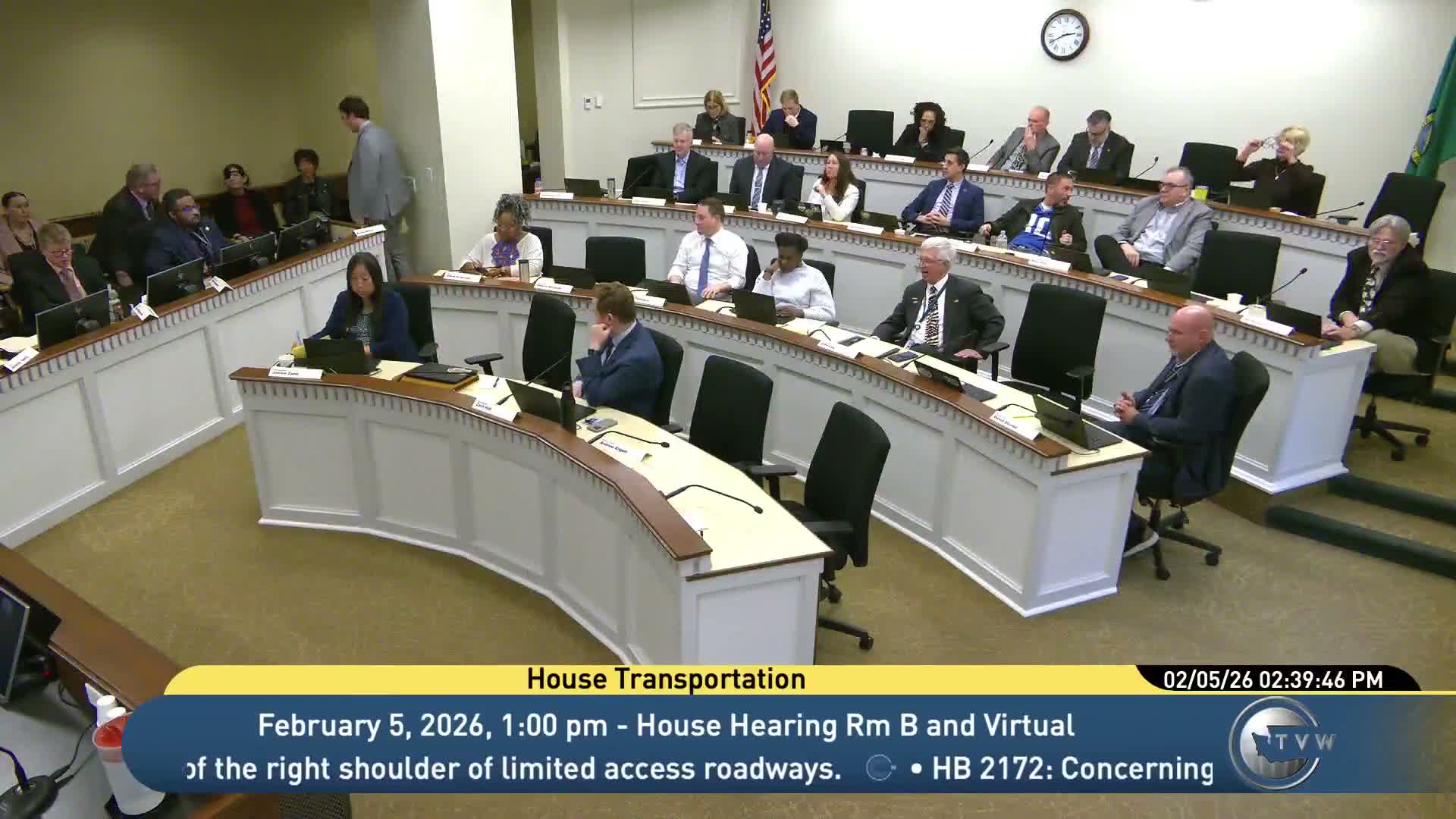
Summary
House Bill 27 18 would push WSDOT to accelerate multiagency permitting and create a public contractor rating website; stakeholders including Associated General Contractors and asphalt contractors opposed the public rating provision, saying it could punish contractors for delays beyond their control and invite protests.
House Bill 27 18, heard Feb. 5 in the Transportation Committee, aims to streamline permitting for transportation projects by tightening timelines for multiagency coordination, requiring early tribal and community outreach, and directing WSDOT to create programmatic or template permit processes where feasible. The bill also would require a publicly accessible contractor rating website that displays metrics such as bid vs. final cost and schedule performance for contractors who bid on state and local transportation projects.
Committee staff and sponsor Representative Richards framed the contractor rating system as part of a broader permitting reform package intended to increase accountability and reward reliable delivery. Richards said the website would be developed with stakeholders and that he recognized factors outside contractors control that must be accommodated in any rating mechanism.
Trade groups testified strongly against section 2 of the bill. Gerry Vanderwood of the Associated General Contractors and Mike Ennis of the Washington Asphalt Pavement Association argued that public ratings based on project outcomes would misattribute blame for excusable, compensable events — undisclosed site conditions, utility conflicts, weather, and scope changes — and could reduce bidder participation, lengthen schedules, spur protests and raise costs. Vanderwood urged removing the rating requirement or subjecting it to much more stakeholder engagement and clear safeguards.
WSDOT and committee staff described the permitting timelines and reporting requirements the bill would impose: multiagency meetings within 30 days of identifying needed permits; efforts to reach permit decisions within 90 days where feasible; and a WSDOT report by Dec. 1, 2027, on templates, programmatic permits and recommendations for legislative change. The bill's permitting provisions and a contractor-rating mechanism were described as a work in progress; sponsors and industry agreed additional stakeholdering is needed before moving to final passage.