
Traffic Safety Commission highlights telematics pilots that helped lower speeds and identify distracted-driving risks
Get AI-powered insights, summaries, and transcripts
Subscribe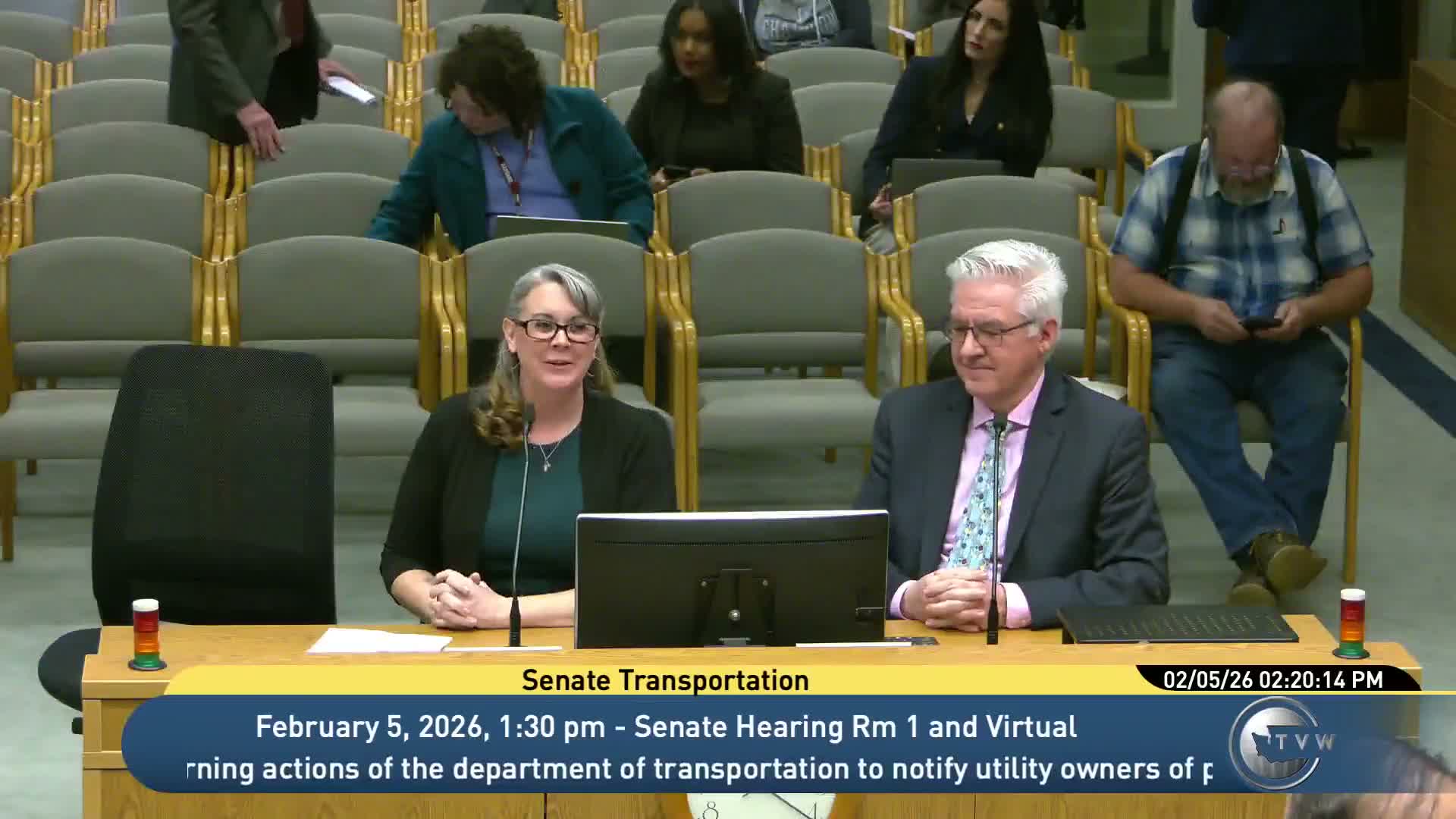
Summary
The Traffic Safety Commission described telematics pilots with Cambridge and Michelin that identify high-risk corridors and measure enforcement effects; a Spokane emphasis weekend showed measurable reductions in excessive speed and Cambridge-derived "phone tapping" measures flagged phone use on 25% of trips in the dataset.
The Senate Transportation Committee on Feb. 5 heard the Traffic Safety Commission's interim findings on telematics projects that use anonymized, opt-in mobile and insurance-provider data to help law enforcement target high-risk roadways.
"We've been the only state in the nation to get the same grant twice" for telematics work, Research Director Stacy Hoff told senators as she described two external grants and work with Michelin Mobility Intelligence and Cambridge Mobile Telematics. Hoff emphasized that all telematics data used by the commission is anonymized and aggregated.
The commission presented two main results: a Michelin-supported targeted enforcement evaluation that found each additional hour of officer presence per mile on specific corridors reduced average speeds (the report cited a 5.6 mph reduction tied to an hour-per-mile increase on interstate corridors), and Cambridge's Street Vision analytics showing high-resolution measures of excessive speeding and phone-tapping events.
In a Spokane case study, Hoff said four emphasis officers over a weekend produced 206 contacts, 128 infractions and 16 criminal citations on a short corridor; Cambridge data showed peak excessive-speeding proportions on the corridor fell by about 5 percentage points and up to 8 points on adjacent segments during the emphasis period.
On distracted driving, Hoff said telematics suggests phone "tapping" occurs in roughly 25% of trips in the opt-in dataset and that 81% of drivers used their phone at least once in the prior month in the sample. She told the committee that telematics outperforms earlier point-in-time observation surveys by providing continuous, county-level measures.
Committee members pressed on privacy and representativeness. Hoff repeatedly stated the data are opt-in (mostly via insurers), anonymized and typically available with a short lag rather than in real time.
The commission said it will provide more detailed materials in a full report due July 1, 2026, and that it is working with dozens of local law enforcement agencies to operationalize the Street Vision tool for routine enforcement planning and evaluation.