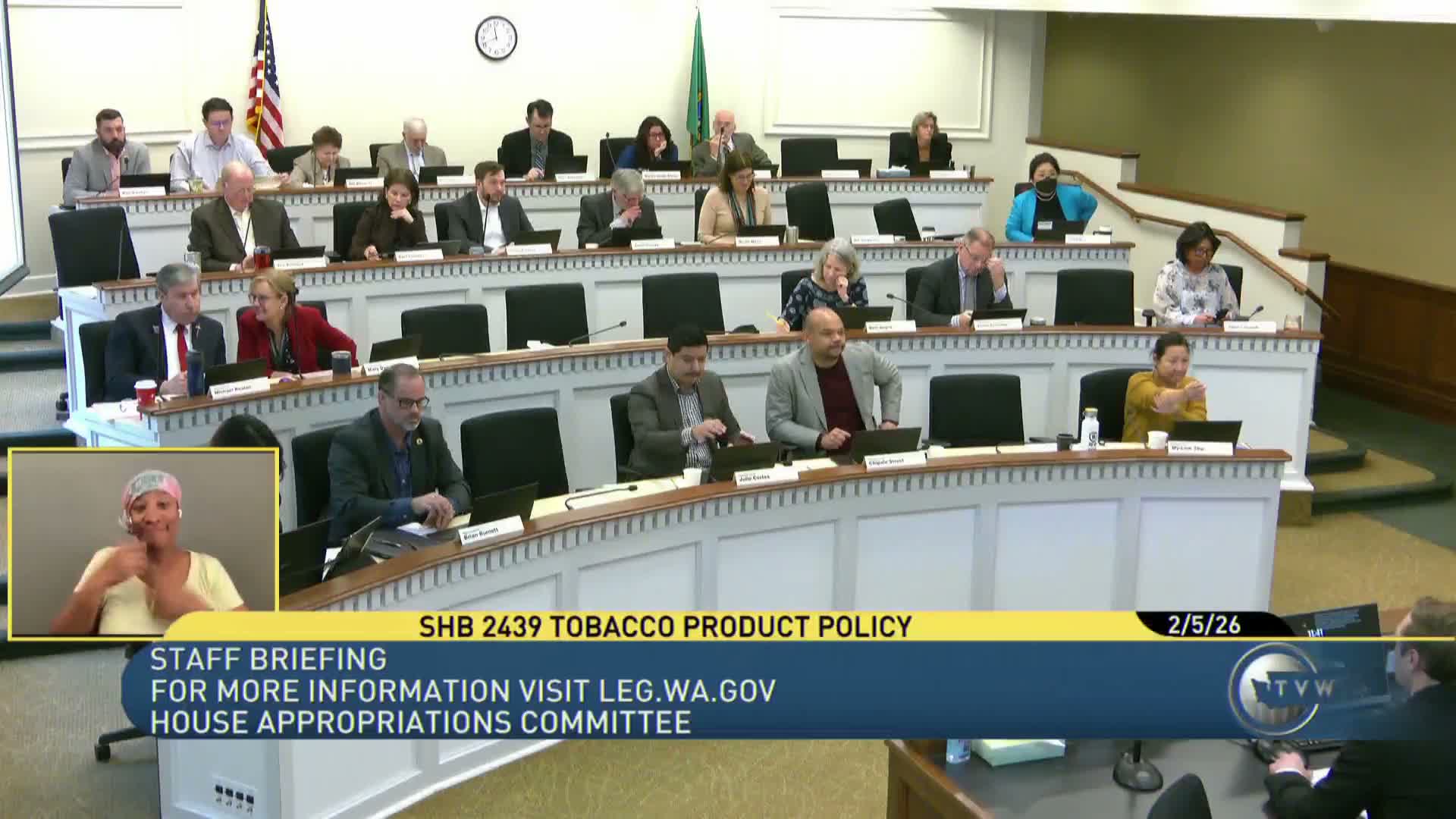
Appropriations Committee weighs broad tobacco and vapor product overhaul, including higher fees and new retailer rules
Loading...
Summary
Staff briefed on the House substitute to HB 24‑39, which would raise tobacco and vapor license fees, require manufacturer certification, strengthen age verification and redirect portions of tobacco tax revenue to cancer research, public health, and youth prevention; retailers and wholesalers warned of high fee jumps while public health groups urged stronger prohibitions on coupons and funding for prevention programs.
Peter Clodfelter and Matt Mazerhart briefed the Appropriations Committee on substitute House Bill 24‑39, a wide‑ranging package of changes to tobacco, cigarette and vapor product law. Clodfelter identified 10 major policy areas, including a responsible vendor training program to be developed by the Liquor & Cannabis Board, higher license fees for retailers and wholesalers, a wholesaler/distributor requirement that could subject products from unlicensed sources to seizure, manufacturer certification for vapor products, laboratory testing authority for agriculture, enhanced age verification and a new producer responsibility study at Ecology.
Clodfelter gave specific examples of fee changes: "the fee for a tobacco products retailer license or a vapor product retailer license would each be increased from $175 per year to $1,000 per year," and wholesalers/distributor license fees would rise to $1,000, while other administrative penalties and fee changes were also described.
Mazerhart presented fiscal estimates showing multi‑million dollar agency costs to implement new enforcement and IT changes (roughly $6 million over a four‑year period across agencies including LCB, Department of Revenue and Ecology), and described transfers and redirections of tobacco tax revenue to dedicated accounts (Andy Hill Cancer Research account, foundational public health services and youth prevention) of up to tens of millions annually depending on collections.
Public testimony split along familiar lines: public health groups supported the bill for its prevention funding and safeguards (urging restoration of coupon bans), while retailer and wholesaler associations opposed steep fee increases and raised concerns about enforcement capacity and unintended competitiveness effects on small businesses. Several industries urged more stakeholder negotiation and expressed concern about certain product certification fees and the impacts on small manufacturers and retailers.
The committee did not vote on the substitute; multiple members asked staff to clarify fiscal impacts and enforcement resources and to continue stakeholder conversations about coupons, fees and retailer compliance support.