Get Full Government Meeting Transcripts, Videos, & Alerts Forever!
Legislative auditors and state patrol point to cost, coordination gaps as chief barriers to ignition interlock compliance
Summary
JLARC found about 41% of drivers required to install ignition interlocks complete the requirement; income is the strongest predictor of installation and the financial assistance program covers roughly $1,400/year but reaches few eligible drivers. State and local pilots raised installations but staff say improved agency coordination is needed.
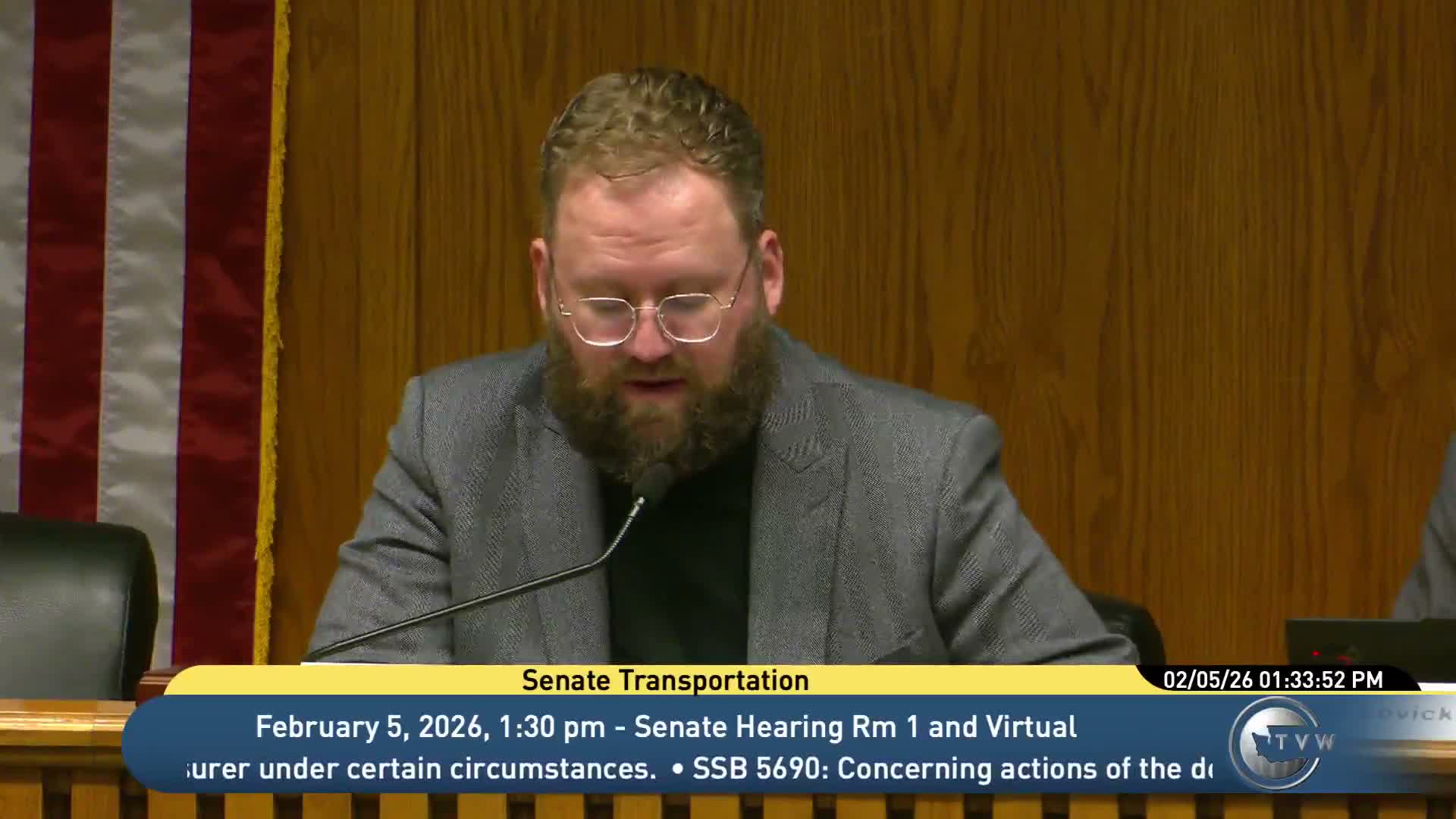
The Senate Transportation Committee on Feb. 5 heard evidence that cost and fragmented agency oversight are major obstacles to wider use of ignition interlock devices (IIDs), devices installed on vehicles to prevent starting if a breath sample registers a blood-alcohol concentration above 0.02.
"So an ignition interlock device is installed in a driver's car. And it prevents the car from being started if the driver blows into the device and it registers a BAC higher than 0.02," Mark McKechnie, external relations director at the Traffic Safety Commission, told the committee as he introduced a Yakima County pilot aimed at boosting installation and compliance.
The Joint Legislative Audit and Review Committee (JLARC) staff reported that, based on a sample of roughly 66,000 drivers from January 2018 through June 2025, an estimated 41% of drivers required to have an IID will complete the requirement and have a device installed at a given point in time. "We calculated an overall,…
Already have an account? Log in
Subscribe to keep reading
Unlock the rest of this article — and every article on Citizen Portal.
- Unlimited articles
- AI-powered breakdowns of topics, speakers, decisions, and budgets
- Instant alerts when your location has a new meeting
- Follow topics and more locations
- 1,000 AI Insights / month, plus AI Chat