
Heated debate over bill allowing limited motorcycle use of highway shoulders
Get AI-powered insights, summaries, and transcripts
Subscribe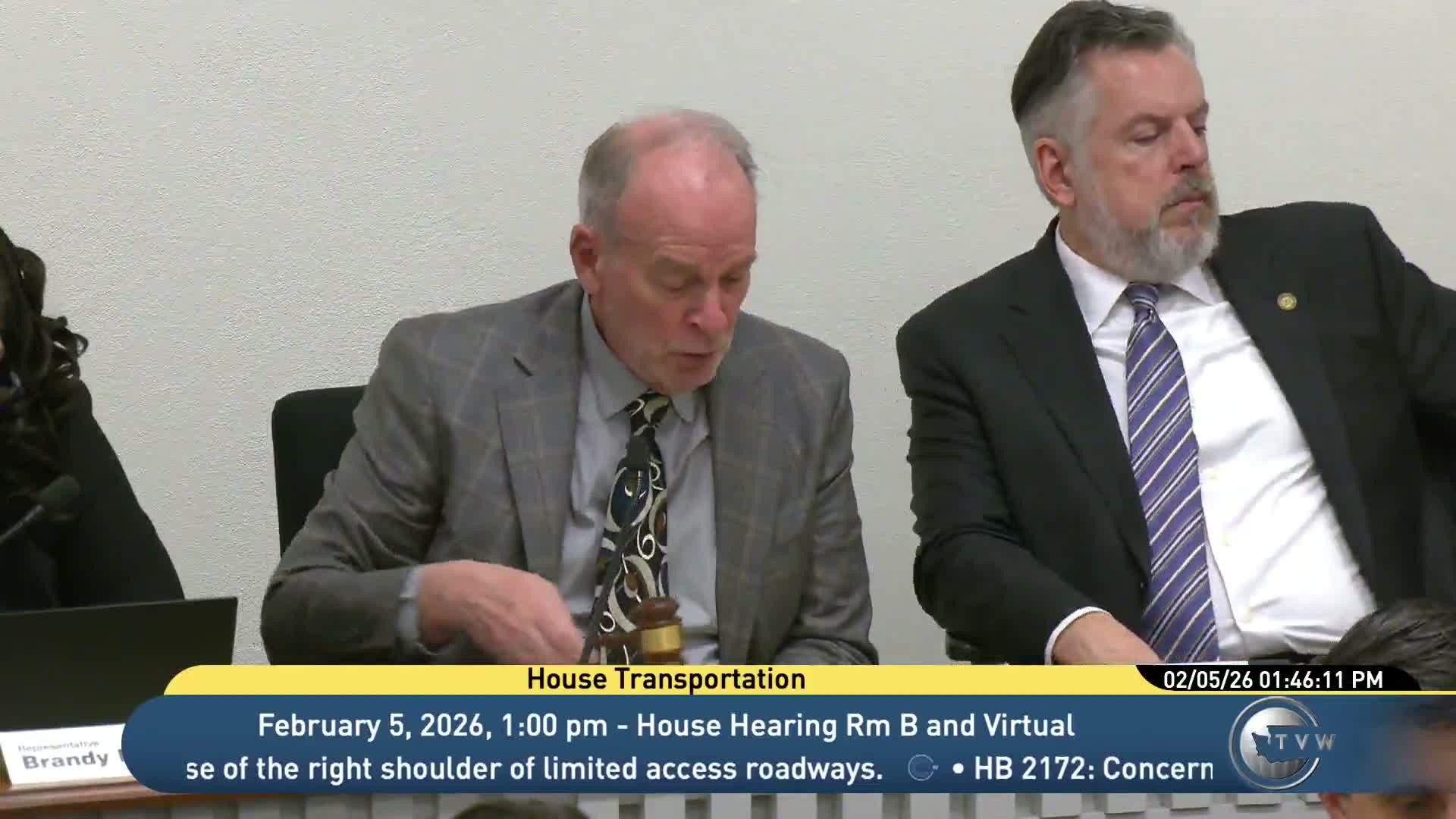
Summary
House Bill 13 67 would let motorcyclists use the right shoulder of limited‑access highways in specified low‑speed congestion conditions; supporters said it reduces rear‑end exposure, while law enforcement, WSDOT and sheriffs warned it increases risks for riders and first responders and raises maintenance and enforcement costs.
The Transportation Committee divided sharply on Feb. 5 over House Bill 13 67, which would permit limited motorcycle travel on the right shoulder of limited‑access highways under low‑speed or stopped conditions and subject to multiple restrictions.
Staff described the bill and a proposed substitute that would add conditions: shoulders must be at least 4 feet wide; motorcycle operators must use hazard lamps; motorcycles may not overtake other vehicles while on the shoulder; operators assume liability for debris‑related damage; and state and local governments would receive immunity for debris‑related third‑party claims.
Representative Ed Orcutt, the sponsor, said the measure is a limited safety alternative to lane splitting and addressed rider fatigue, heat stress and being vulnerable in stop‑and‑go traffic. "Lane splitting is not the answer... I believe right shoulder driving is," Orcutt said, framing the bill as a controlled, low‑speed option that allows riders to seek relief at the next exit.
Public testimony divided along safety and operational lines. Supporters included motorcyclist trainers and emergency responders who argued shoulder riding during severe congestion reduces rear‑end exposure and secondary collisions. Nathan Sharp, an EMS and fire veteran with 25 years of experience and an advanced rider instructor, summarized research showing controlled shoulder movement can reduce rear‑end exposure nearly 50 percent in dense traffic.
Opponents included the Association of Sheriffs and Police Chiefs, the Washington State Patrol and WSDOT. James McMahon of the sheriffs and chiefs association said motorcycle riders are overrepresented in fatal collisions and noted that debris, parked or emergency response vehicles often occupy shoulders. Captain Dion Glover of the Washington State Patrol said allowing routine shoulder use would complicate enforcement and increase risk to responders who rely on the shoulder for incident response. WSDOT maintenance leadership testified that permitting shoulder use would require increased shoulder sweeping, more signage and additional maintenance patrols, producing indeterminate but potentially substantial costs.
DOL and WSDOT fiscal notes estimated administrative impacts: the Department of Licensing flagged a half‑FTE to coordinate outreach and update knowledge tests and materials; WSDOT estimated potential large increases in sweeping and signage costs (presented as tripling current sweeping costs as an illustrative figure).
There was no committee vote on HB 13 67 on Feb. 5. The hearing captured sharply different safety judgments from riders, law enforcement and maintenance officials, and sponsors signaled intent to refine substitute language.