Get AI Briefings, Transcripts & Alerts on Local & National Government Meetings — Forever.
Committee okays change to let utilities count avoided greenhouse gases in energy‑efficiency test
Loading...
Summary
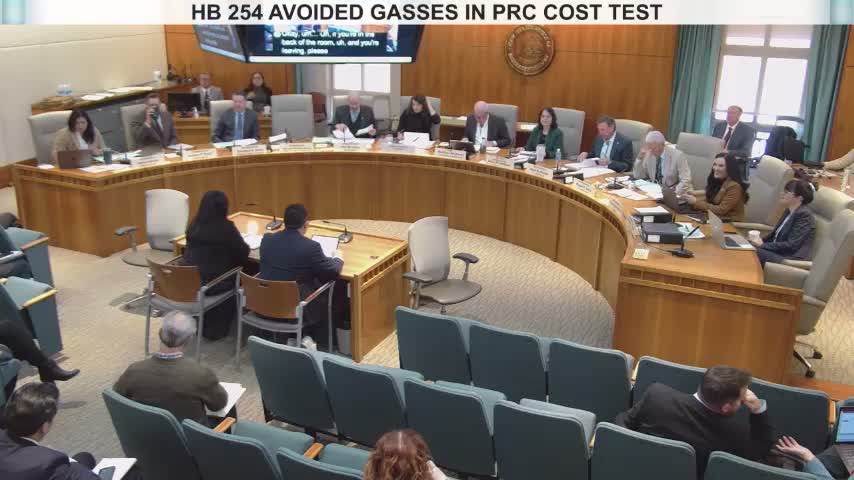
HB254 would allow investor‑owned electric utilities to include the value of avoided greenhouse gas emissions in the statutory utility cost test used by the PRC to determine energy‑efficiency program cost‑effectiveness; the committee voted 7–3 to advance the bill after debate about customer charges and program cost recovery.
Sponsor advocates said House Bill 254 updates New Mexico’s Efficient Use of Energy Act to permit investor‑owned electric utilities and the Public Regulation Commission to account for avoided greenhouse gas emissions when conducting the statutory utility cost test for energy‑efficiency programs. The sponsor and utility witnesses said the change is a targeted, permissive update that could allow more programs — including electrification and heat‑pump incentives — and greater emphasis on low‑income customer programs.
Why it matters: Backers argued the change will let the PRC and utilities more fully value emissions reductions, expand cost‑effective program options and help lower long‑term bills through energy efficiency. “HB254 makes a targeted update to New Mexico's energy efficiency law by allowing utilities to include the value of avoided greenhouse gas emissions when evaluating cost effectiveness,” Alex Eubanks (Southwest Energy Efficiency Project) told the committee.
Concerns raised: Several members, notably Rep. Montoya, asked whether the change could let utilities seek additional cost recovery beyond existing participant fees and whether it creates the risk of higher customer bills or perceived “double recovery.” Sponsors and witnesses replied the change is permissive and does not by itself create a new charge; instead, it adds an emissions value inside the pre‑existing statutory cost test that the PRC applies when evaluating program cost‑effectiveness.
Committee action and next steps: A do‑pass motion carried on a roll‑call vote of 7–3. Representative Murphy explained he would follow up with stakeholders on minor changes and asked for continued engagement on cost issues before floor debate.
What remains unresolved: Committee members asked for clarification on how the PRC would apply the new value, the scope (investor‑owned electric utilities only), and whether a future expansion to cooperatives or gas utilities is appropriate.