Get AI Briefings, Transcripts & Alerts on Local & National Government Meetings — Forever.
House committee backs $100M trustee funding to expand public‑land access and disaster recovery
Loading...
Summary
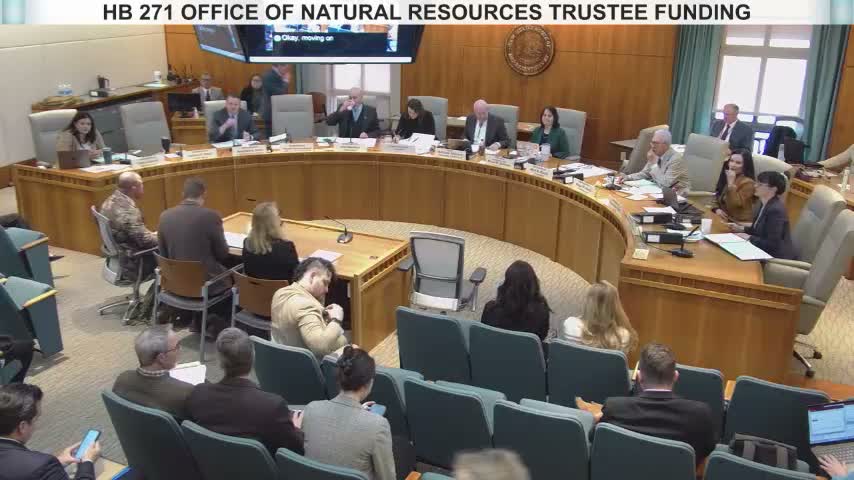
The committee recommended HB271 do pass. Sponsors said the Office of Natural Resource Trustee would use budget language to support disaster recovery, land acquisition and recreational access, with a public, transparent process and partnerships across counties and tribal governments.
Representative Small sponsored House Bill 271 and said the measure provides budget language and an appropriation to allow the Office of Natural Resource Trustee (ONRT) to invest in natural‑resource recovery and public‑land projects, and to support communities recovering from disasters. "This money allows a very strong start, focus this year working with Lincoln County," Small said, noting the proposal complements HB246.
Why it matters: Sponsor and trustee witnesses framed HB271 as an initial investment — the transcript references $100 million overall and a $30 million set‑aside for state matching — aimed at restoring riparian areas, expanding recreation access and supporting local economic resilience in fire‑ and flood‑affected communities.
Support and rationale: Conservation groups and wildlife organizations voiced strong support, arguing investments would restore watersheds, expand public recreation and bolster the outdoor economy. Dan Roper of Trout Unlimited highlighted fisheries and local economic benefits; attendees cited roughly 275,000 fishing licenses sold last year as evidence of the sector’s size.
Committee concerns and responses: Several legislators asked for guardrails on land acquisition, whether ONRT would gain eminent domain authority, and how management choices might affect grazing allotments and hunting. Trustee Hartstevens and the sponsor said ONRT’s existing public, transparent process governs spending decisions and that HB271 does not create new eminent‑domain powers or retroactively change existing on‑the‑ground permits; any management changes would be coordinated with agencies such as the Department of Game and Fish and State Parks.
Committee action and next steps: A motion to give HB271 a do‑pass recommendation carried on a roll‑call vote of 9–1. Members who voted no or asked to explain their vote requested additional detail on prioritization and the percent of the appropriation that would go to disaster recovery versus other ONRT priorities; sponsors and trustee staff said they will follow up with committee members prior to floor action.
What remains unresolved: Lawmakers asked for clearer prioritization criteria and guardrails for land acquisition and for assurances about how ONRT will ensure continued access for grazing and hunting where appropriate. The trustee pointed to ONRT’s public process and past settlement work as the model for allocating proceeds and said the office would work with local partners before purchases or restorations take place.