Lifetime Citizen Portal Access — AI Briefings, Alerts & Unlimited Follows
Senate Finance Panel Hears Treasury on FSOC 2025 Report; Lawmakers Press on Inflation, CDFI Funding and Stablecoins
Loading...
Summary
Treasury Secretary Bessent told the Senate Committee on Banking that FSOC's 2025 report refocuses the council on growth and household resilience. Senators pressed him on inflation and grocery prices, withheld CDFI funds, stablecoin policy (Genius Act), Fannie/Freddie oversight and the president's proposed 10% temporary credit-card cap.
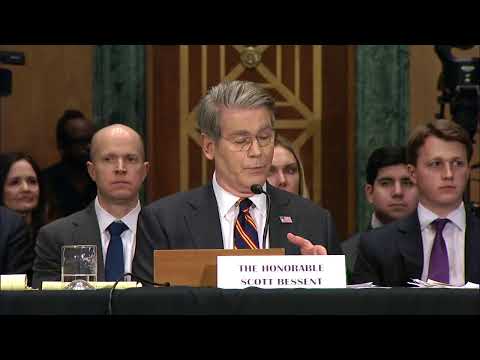
WASHINGTON — Treasury Secretary Bessent told the Senate Committee on Banking, Housing, and Urban Affairs on Thursday that the Financial Stability Oversight Council's 2025 annual report reframes FSOC to prioritize economic growth and household resilience.
"In this year's report, FSOC shifted away from its past approach...introducing a new structure centered on fostering economic growth and security," Bessent said in his opening testimony, laying out FSOC's four priorities: Treasury markets, cybersecurity, regulatory modernization and artificial intelligence.
The hearing devolved into a wide-ranging question-and-answer session in which senators repeatedly pressed the secretary on how the administration's policies are affecting everyday costs for families, whether Treasury is using its leverage on GSEs, and when congressionally appropriated funds would reach community lenders.
Ranking Member Warren, in her opening statement, accused the administration of favoring Wall Street at the expense of ordinary families: "President Trump's economic agenda is failing families," she said, citing higher grocery, electricity and health-care prices and arguing that regulatory rollbacks have weakened consumer protections.
Bessent defended recent economic readings and attributed progress to the administration's policies, saying recent CPI readings have fallen and that tighter fiscal paths helped reduce interest rates. "We've been at 2.1%," he said when discussing recent inflation measures.
Several Democrats, led by Senator Mark Warner, pressed Bessent about $324 million in CDFI (Community Development Financial Institution) funding for fiscal year 2025 that committee members said remains unreleased. "When can we expect those funds to get released?" Warner asked. Bessent replied, "I can't give you an answer. OMB will decide the terms and the timing of the CDFI apportionments," but said Treasury would follow statutory duty once OMB acts.
Stablecoins and the Genius Act
On crypto policy, senators from both parties praised the Genius Act and pressed Treasury about preserving U.S. leadership. "This can be an important source of funding for the U.S. government as we push down the funding for U.S. government," Bessent said, describing stablecoins backed by high-quality liquid assets as a mechanism to attract new sources of funding and keep innovation onshore.
Community banks, deposit insurance and regulatory tailoring
Republican senators urged regulatory tailoring to help community banks that they say have declined in number and competitiveness since the financial crisis. Senator Hagerty described bipartisan legislation to expand targeted deposit insurance for non-interest-bearing business accounts; Bessent said he supports efforts to reduce deposit volatility and tailor supervision so small banks can better serve Main Street.
Fannie Mae and Freddie Mac oversight
Senators asked whether Treasury is using its authority over Fannie Mae and Freddie Mac conservatorship to enforce board governance and compliance. Bessent directed many technical questions to the Federal Housing Finance Agency, saying that while Treasury retains a financial stake through preferred shares and warrants, operational and governance questions fall to FHFA.
Credit-card APR cap and consumer protections
Lawmakers asked whether Treasury supports President Trump's proposal for a temporary 10% cap on credit-card interest rates. Bessent said he "wholeheartedly support[ed]" the president's policy but cautioned that market effects, particularly on asset-backed securities and credit access, would need careful review.
Sanctions, Russia and money-laundering enforcement
On sanctions, senators sought clarity about the administration's designations and actions against Russia and Iran. Bessent said Treasury has used sanctions to pressure Iran and cited financial stress within Iranian institutions as evidence of leverage. On money laundering, he emphasized stepped-up enforcement against nonbank money-service businesses and stronger KYC requirements.
Process and next steps
Committee staff said written questions for the record are due Thursday, Feb. 12, and Secretary Bessent has 45 days to respond. The chairman adjourned the hearing without any formal committee votes.
Why it matters
FSOC's shift toward integrating growth and household financial resilience into systemic-risk analysis will shape how Treasury and member agencies prioritize surveillance and regulation. The hearing highlighted several policy trade-offs: how to preserve financial stability while easing burdens on small banks, how to manage crypto innovation without creating deposit volatility, and how to ensure congressionally intended funds reach community lenders.
What comes next
Senators will monitor OMB's timing on CDFI apportionments, follow the household resilience working group's outputs later this year, and press Treasury for detailed responses to submitted questions for the record.