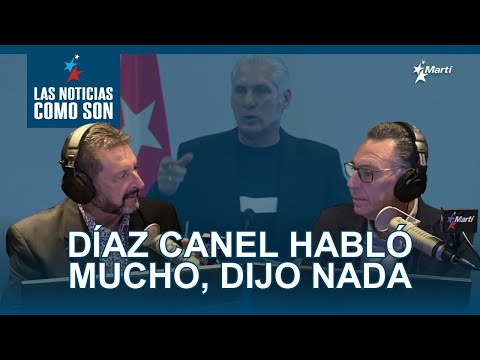
Radio Martí panel: Díaz‑Canel’s two‑hour address offers few concrete answers on Cuba’s energy crisis
Loading...
Summary
Hosts and two guest journalists criticized President Miguel Díaz‑Canel’s two‑hour televised address for blaming external actors while providing no specific, immediate measures to address fuel shortages, refinery capacity limits, and expanding blackouts that are disrupting transport and daily life.
MIAMI — Radio Martí hosts José Luis Ramos and Amado Gil and guests Alejandro Tur Valladares and Omar López Montenegro criticized President Miguel Díaz‑Canel’s two‑hour television appearance as falling short on concrete steps to relieve Cuba’s acute fuel and power shortages.
“Fue una amistosa conferencia de prensa…habló mucho, pero no dijo nada,” Amado Gil said, summarizing the panel’s view that the address delivered rhetoric and reassurances without timelines or operational detail. The hosts and guests noted Díaz‑Canel repeatedly framed the crisis as driven by external actors and media narratives while saying little about immediate remedies.
Panelists highlighted several specifics Díaz‑Canel referenced but did not operationalize: visits to provinces; internal meetings at the politburo and council of ministers; and the revival of old refinery plans to treat heavy Cuban crude. Alejandro Tur Valladares, reporting from Cienfuegos, said the suggestion of restarting refinery work overlooked scale and technical constraints. “Vi a Díaz‑Canel muy nervioso…habló de desempolvar planes para refinar el petróleo crudo cubano,” Alejandro said, adding that the island lacks the volumes and supply chains to run refineries effectively without significant imports or additives.
The program noted an operational consequence already visible: Transporte Habana posted that several urban public‑transport routes have been suspended because of fuel shortages, a development the panel said underscores immediate civilian impact. The hosts also cited an exchange in which analysts said Cuba has not received crude shipments since December, a fact they said exacerbates shortages of gasoline and diesel.
Omar López Montenegro framed the address in historical terms, arguing the regime repeatedly uses external blame while admitting, in practice, persistent shortages. “La culpa de todos la tiene…los Estados Unidos,” Omar said, and added that the government’s rhetoric at times tacitly acknowledges systemic failure without offering a transparent transition plan.
On the humanitarian risk, the panel read and discussed a United Nations spokesman’s message relaying that Secretary‑General Antonio Guterres is “extremely concerned” Cuba could face a worsening humanitarian situation if petroleum needs are not met. The guests debated whether the UN should channel aid directly to civilians instead of state institutions and whether international pressure on third‑party suppliers could further limit fuel flows.
The program also addressed social‑media scrutiny of the broadcast’s timing; hosts and guests observed posts—such as a journalist’s wristwatch timestamp—that raised questions about whether the address was live. Panelists said the form (live vs. recorded) mattered less than the lack of actionable measures for power and fuel restoration.
The discussion closed with a repeated theme: panelists said responsibility for fixing shortages rests primarily with Cuban authorities, who have the tools to pursue policy changes but have so far emphasized narrative and external causes rather than immediate operational solutions. The program ended with thanks to guests Alejandro Tur Valladares and Omar López Montenegro.
What’s next: the panel urged attention to on‑the‑ground indicators (transit suspensions, blackout frequency, and fuel arrivals) and said more reporting is needed on refinery capacity and precise timelines for any announced measures.