Get Full Government Meeting Transcripts, Videos, & Alerts Forever!
Get email alerts on the Housing topic
No spam. Unsubscribe anytime.
House approves limited faith-based affordable housing bill with 15-year affordability requirement
Summary
House Bill 333 allows faith-based organizations to convert existing, pre-2026 property into small-scale affordable housing (capped at 24 units) with a 15-year affordability requirement and ministerial review, and was passed by the Kentucky House on Feb. 6, 2026.
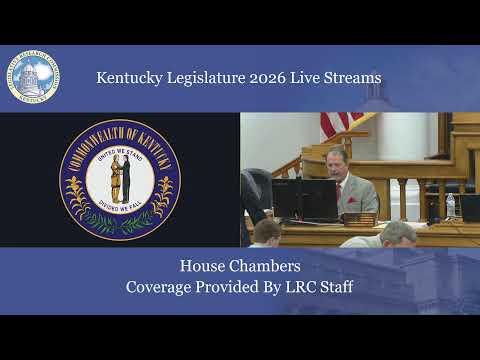
The Kentucky House on Feb. 6, 2026, approved House Bill 333, a measure designed to allow faith-based organizations to develop small-scale affordable housing on property they owned before Jan. 1, 2026.
Speaking in support, the member identified as the gentleman from Taylor said the bill "allows faith based organizations to build small scale affordable housing units capped at no more than 24" and noted the measures safeguards: projects must comply with existing building, fire, health and safety codes; ministerial review (streamlined but not eliminated) will confirm compliance; affordability must be maintained for at least 15 years by a recorded deed restriction; and cumulative limits prevent clustering on adjacent properties owned by the same institution. The sponsor said the bill grew out of efforts by faith communities, citing the Sisters of Lorettos adaptive reuse of a vacant building into short-term housing.
The bills supporters framed it as a targeted, modest tool to expand housing options and repurpose vacant buildings, including former school facilities, while preserving local oversight and safety standards. The transcript records brief floor expressions of support from several members and an abstention: the member identified as the lady from Shelby asked to be recorded as abstaining from the vote.
The House recorded the passage of HB 333 following a roll call. Next steps include enrollment and the usual legislative processing toward the Senate or the governor as applicable.
What HB 333 does - Allows faith-based institutions to develop up to 24 affordable housing units on property owned before 01/01/2026. - Requires a 15-year affordability period enforced through a recorded deed restriction using federal HUD standards to define affordability. - Requires ministerial review to ensure compliance with objective building, fire, health and safety regulations (no waivers). - Imposes cumulative limits on contiguous or nearby properties owned by the same institution to prevent large-scale clustering.
Sponsor rationale and context According to the floor explanation, the measure was motivated by local faith leaders who converted vacant space into short-term housing and by policy models used in other states to allow faith-based affordable housing at modest scale. The sponsor said the bill is intended to help address homelessness and housing shortages while protecting neighborhood compatibility.
What the transcript does not show The floor explanation does not provide an estimate of how many projects would qualify statewide, specific fiscal impacts, or the administrative process details local governments will use to apply ministerial review. Those items will be determined in implementation and through follow-up with local planning authorities.