Get Full Government Meeting Transcripts, Videos, & Alerts Forever!
Get email alerts on the Policy Updates topic
No spam. Unsubscribe anytime.
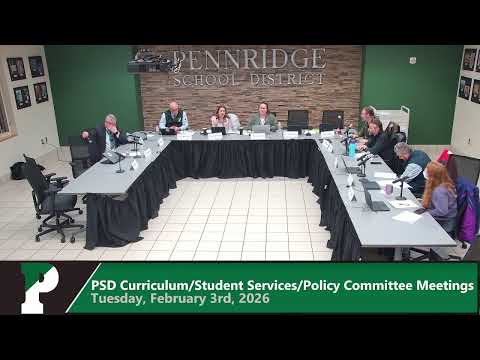
Policy committee reviews attendance, safety and first reading of AI policy; attendance limits and Act 44 changes highlighted
Summary
The policy committee conducted a multi‑topic review: second reading of bullying reporting; discussion of attendance policy updates (3 school‑day parent note, 10 cumulative parent‑note days, educational instability and homelessness language); choices under Act 44 for reporting to local law enforcement; and a first reading of a generative AI policy with debate over parental consent, student training and administrative regulation development.
Pennridge’s policy committee reviewed multiple policies during a lengthy session that covered bullying reporting, attendance rules, school safety and a first reading of a new generative AI policy.
Policy lead (Speaker 15) said the district has implemented an electronic bullying reporting form and presented PSBA‑recommended language for policy 249 (bullying/cyberbullying). The committee then discussed attendance policy updates tied to state code and PSBA recommendations. Key discussion points included defining and preserving protections for students experiencing educational instability and homelessness, codifying a three‑school‑day deadline for parental notes, and retaining 10 cumulative parent‑note days in a school year before a doctor’s note is required.
Speakers debated practicalities: board members asked whether the three‑day limit counts school days or calendar days (the committee agreed to codify it as three school days) and raised concerns about families who lack evening medical appointments. Staff emphasized that counselors and social workers would be involved in cases that approach habitual truancy thresholds and that the district seeks to balance compassion with legal obligations under state attendance law.
On school safety, the committee discussed Act 44 reporting requirements and whether certain violations should be reported to local law enforcement. Legal counsel (to be consulted) and district security staff were asked to review the proposed language and provide guidance on how definitions (for example, "possession") apply to non‑student adults or residents living near schools.
The committee completed a first reading of a new generative AI policy addressing staff and student use of generative AI, data privacy (COPPA/FERPA concerns were raised), ethical prohibitions on using generative AI for personnel decisions, and the recommendation that the district develop an administrative regulation to vet and authorize third‑party AI tools. Board members debated whether parental consent should be required for student use; several members recommended tabling or seeking legal counsel before a second reading to allow the district to build administrative safeguards and vendor assessments.
Next steps: staff will route attendance and safety questions to the solicitor and local law enforcement for legal review; cost and contract implications for AI tools will be evaluated by IT, curriculum and business teams; the AI policy will be revisited at a subsequent reading after additional input.