
WCPS early-learning shows strong KRA gains; pre-K students outperform peers
Get AI-powered insights, summaries, and transcripts
Subscribe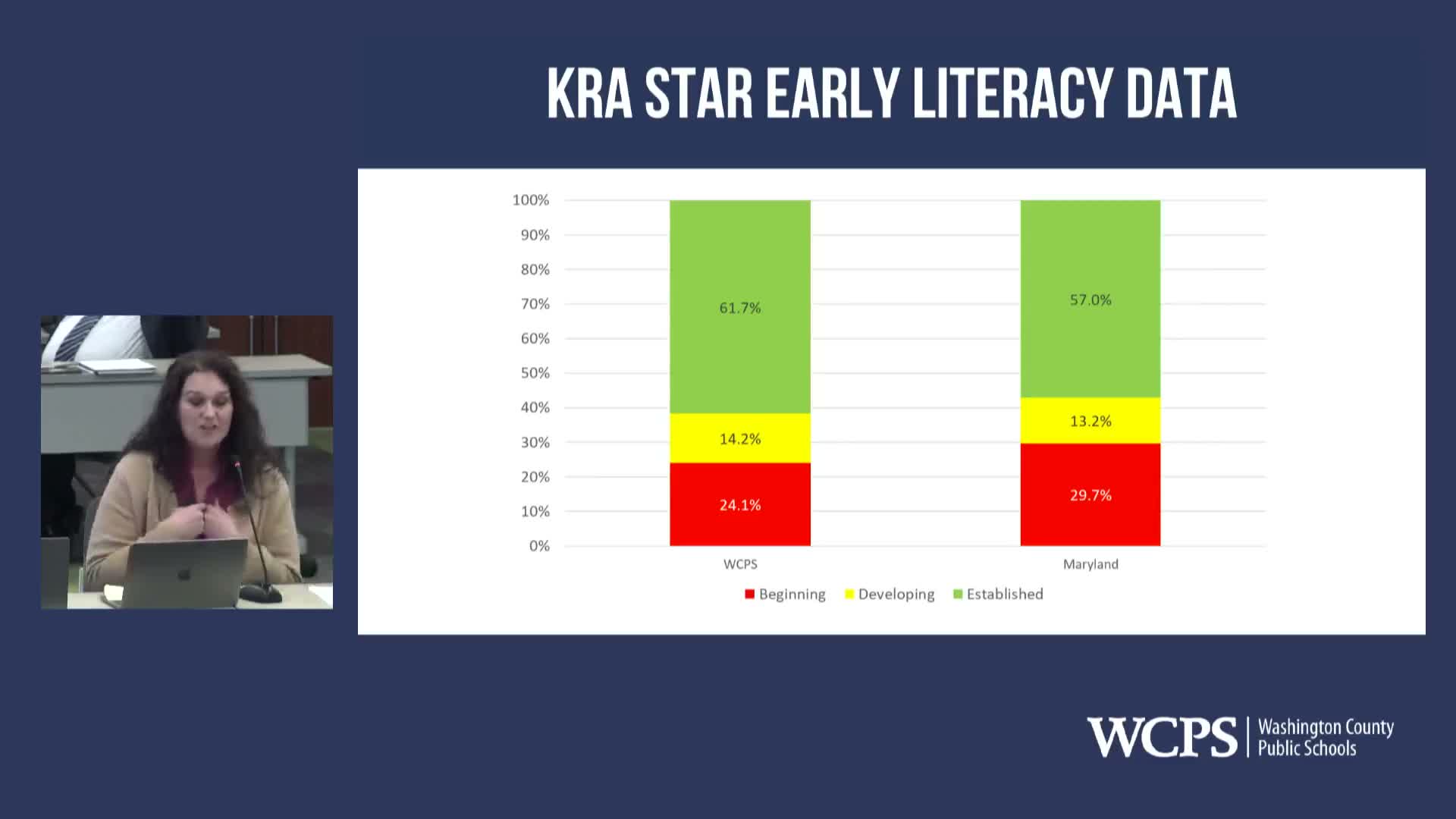
Summary
District early-learning staff reported KRA results showing WCPS incoming kindergartners outperformed Maryland averages in literacy (61.7% vs. 57%) and math (61.1% vs. 55.3%); students who attended WCPS pre-K had higher 'established' rates (literacy 70%, math 67.2%).
Kelly Longerbeam, coordinator for early learning, and Gina Hoover, early learning lead teacher, presented the district’s kindergarten readiness assessment (KRA) results taken this past fall on the STAR Renaissance platform.
“61.7% of our students are established” in literacy, Longerbeam said, comparing WCPS results to the Maryland state average of 57% established. For math, Longerbeam reported 61.1% of incoming kindergarten students 'established' compared with the Maryland average of 55.3%.
The presenters emphasized the difference made by district pre-K: WCPS pre-K students posted markedly higher rates of readiness — roughly 70% established in literacy and about 67% established in math — while students who did not attend WCPS pre-K had lower established rates. Hoover explained the KRA is adaptive and includes a literacy, math and a social-academic-emotional-behavior screener (SABERS), and staff administer the assessment one-on-one to incoming kindergarteners.
Board members asked how the district tracks cohort outcomes over time; Dr. Willow and other staff said the district follows cohorts and will monitor MCAP third-grade results to assess long-term impact. Presenters also described family-engagement efforts — porch visits, kindergarten readiness nights and professional development for pre-K providers — as contributors to improved readiness.
Longerbeam and Hoover noted the KRA used this fall is new (first statewide administration since 2023) and breaks out domains rather than producing a single composite score, giving teachers more targeted diagnostic information. The presenters said assessment data will inform instruction and early intervention plans.