
WCPS superintendent unveils FY2027 draft budget with $14M new revenue, warns of remaining deficit
Get AI-powered insights, summaries, and transcripts
Subscribe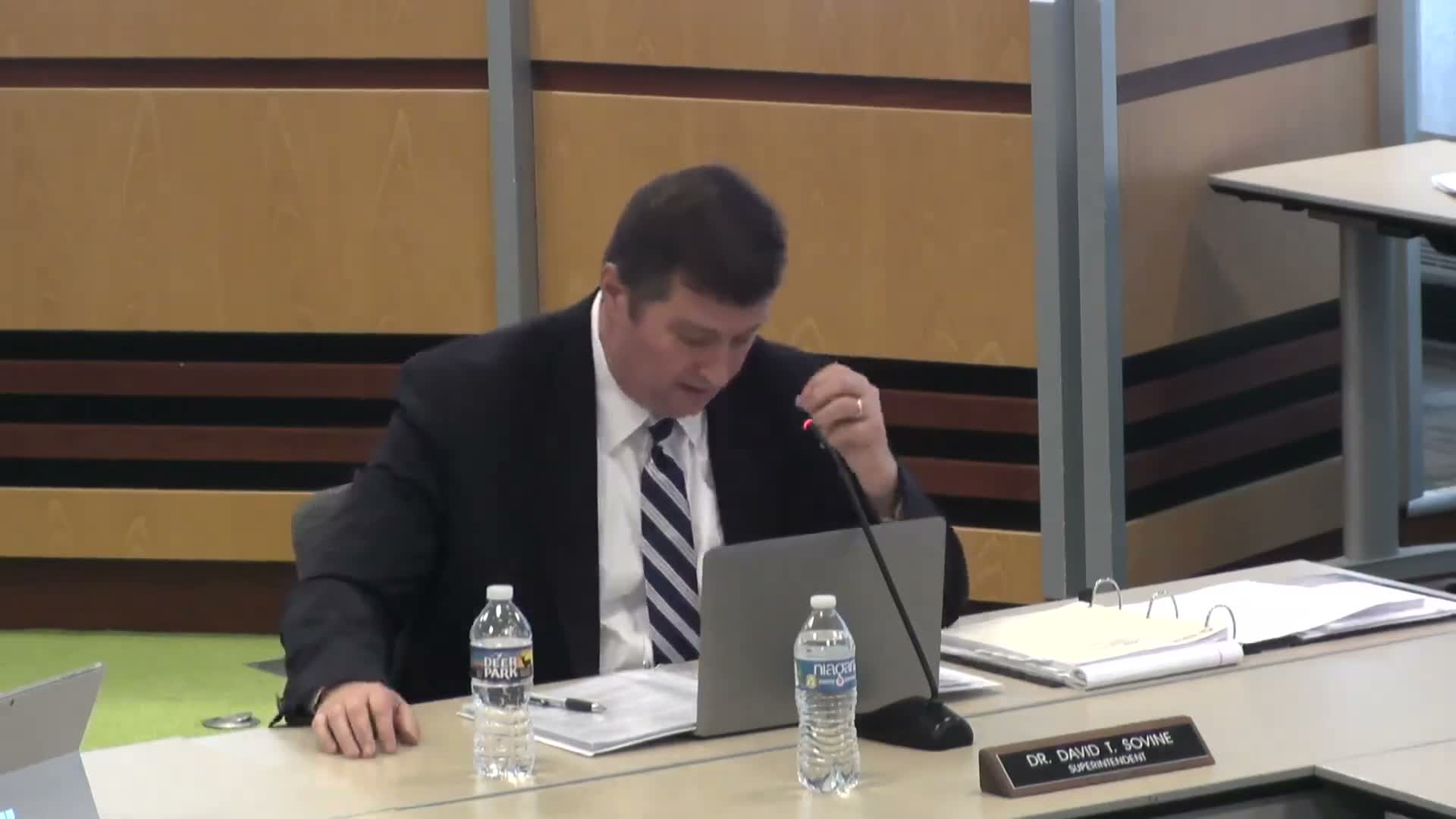
Summary
Superintendent Dr. Savine presented a draft FY2027 general fund budget that includes roughly $14 million in new revenue but faces persistent deficits due to rising student needs and $6M+ increases in employee benefits; the plan proposes targeted investments in special education, pre-K, and limited salary increases alongside $915,000 in reductions.
Superintendent Dr. Savine presented Washington County Public Schools’ draft FY2027 general fund budget, saying the district expects about $14,000,000 in new revenue but remains short of covering growing student needs and higher personnel costs.
“The good news is we are receiving about $14,000,000 more in new funding this year,” Dr. Savine said, but he added that rising costs mean the system still faces a budget deficit. He told the board the proposal includes “difficult decisions and challenging cuts.”
Dr. Savine broke down the $14 million: nearly $8.7 million from the state, about $5.2 million from the county and roughly $305,000 from other sources. He cautioned that two state-level uncertainties could reduce funding further: the governor’s proposed use of an older compensatory formula and a potential pension-cost shift that could require an estimated $900,000 in additional county funding.
A large portion of new expenditures is tied to student needs and restricted blueprint categories. Dr. Savine highlighted required blueprint investments including pre-K and multilingual learner staffing and a career-ladder allocation for National Board Certification. He also proposed adding seven new special-education program classrooms — estimated to serve 70–90 additional students — continuing six special-education paraprofessionals and funding assistant principals at six elementary schools to bolster instructional and behavioral supports.
On personnel costs, Dr. Savine said employee benefits (health insurance and pension contributions) are rising by a combined figure of over $6,000,000, and the proposed salary resource pool for FY27 is about $2,000,000 — roughly a 1% cost-of-living increase for staff. He told the board these increases are “largely outside of our control” and stressed the need to retain staff while balancing fiscal constraints.
Transportation and facilities pressures also shaped the draft. Dr. Savine said a single standard general-education bus now costs about $160,000 and proposed allocating $400,000 to begin restoring the bus replacement cycle, enabling the purchase of two buses and two passenger vans for out‑of‑county routes serving small groups of students.
To limit the impact on students, the superintendent proposed reductions totaling about $915,000, more than $600,000 of which would come from the Center for Education Services (CES). Proposed central-office reductions include not filling the vacant associate superintendent position and redistributing responsibilities among existing staff.
Chief Operating Officer Mr. Proulx outlined where board members can find detailed line-item information in the package: a short summary referencing Roman-numeral sections and a full general-fund budget with page and line numbers for each line item. Board members indicated consensus to forward the superintendent’s draft to the business session for possible adoption as the district’s draft budget.
The board is expected to review the draft in the business session in two weeks; Dr. Savine said state budget actions later this year could still change final revenue allocations.