Glendale commissioners hear warnin gs on "Zone 0" rules that could reshape urban tree canopy
Loading...
Summary
A sustainability commission presentation outlined trade-offs in California's "Zone 0" ember-resistance regulations, warning that strict interpretations could require removing vegetation near homes, raise homeowner costs, affect insurance and threaten parts of Glendale's canopy; commissioners asked staff to track the regulation and related legislation.
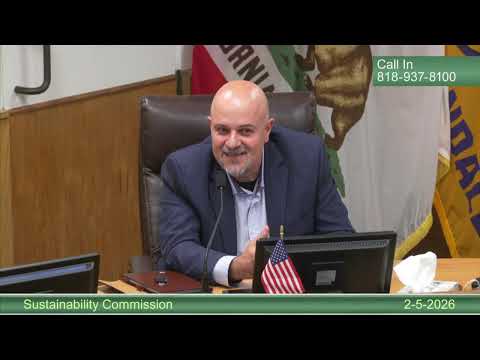
Stephanie Landrigan, a landscape architect and director of Altadena Green, told the Glendale Sustainability Commission on Feb. 5 that California's "Zone 0" ember-resistance regulation is moving from statute into the Board of Forestry's regulation process and could have substantial local impacts if enacted strictly.
Landrigan said Zone 0 began as ember-resistant legislation authored in 2020 by Assemblymember Laura Friedman and is now being framed into regulation by the Board of Forestry. She described three options under discussion: a strict no-vegetation approach in the immediate perimeter of structures; a regime allowing well-maintained trees with required trimming (for example, lifting canopies five feet from roofs and 10 feet from chimneys); and intermediate approaches allowing some planted and potted vegetation. "The graphic from CAL FIRE looks stark," she said, and may not fit dense urban lots where neighbors live "cheek to jowl."
Why it matters: Landrigan said much of Glendale has been newly classified in the very high fire severity zone and that, as presented, the regulation would apply there. She emphasized trade-offs between fire safety and trees'benefits for shade, stormwater retention and biodiversity. She also flagged financial and practical burdens: property-hardening costs (she cited recent examples such as a $25,000 roof and a $6,000 estimate to add certain vent protections) and the challenge of processing large amounts of removed vegetation. Landrigan also relayed a figure she attributed to a prior fire chief: the city could lose "33% of our canopy" under a draconian approach.
Commissioners pressed for detail on costs, inspection authority and local control. Landrigan said inspections related to compliance could fall to insurers rather than the fire department, and that she had been advising the Board of Forestry to include options that preserve local discretion. She noted the state changed many fire maps, moving parcels into higher-severity zones, which has insurance implications for homeowners. Landrigan summarized technical wildfire drivers as embers, embercast and radiant heat and argued that "hydrated" and properly maintained vegetation can function as ember sinks and sometimes protect structures.
Public reaction and next steps: Caller Alan Dish thanked the commission and the presenter and urged care to avoid unnecessary tree removals that reduce long-term canopy benefits. Commissioners asked staff to prepare simpler compliance guidance for residents and to explore training for landscapers on appropriate pruning. Landrigan said she and local landscape architects can work with city staff and the fire chief to produce guidance once the final regulation is settled.
The board of forestry process continues. Commission members were told staff will track the regulation and related bills and bring back targeted recommendations and outreach materials for Glendale residents.
Sources: presentation by Stephanie Landrigan to the Glendale Sustainability Commission, Feb. 5, 2026; public comment from caller Alan Dish.