
Rep. Eric Maki outlines bill to cut state grocery sales tax, create school construction fund
Get AI-powered insights, summaries, and transcripts
Subscribe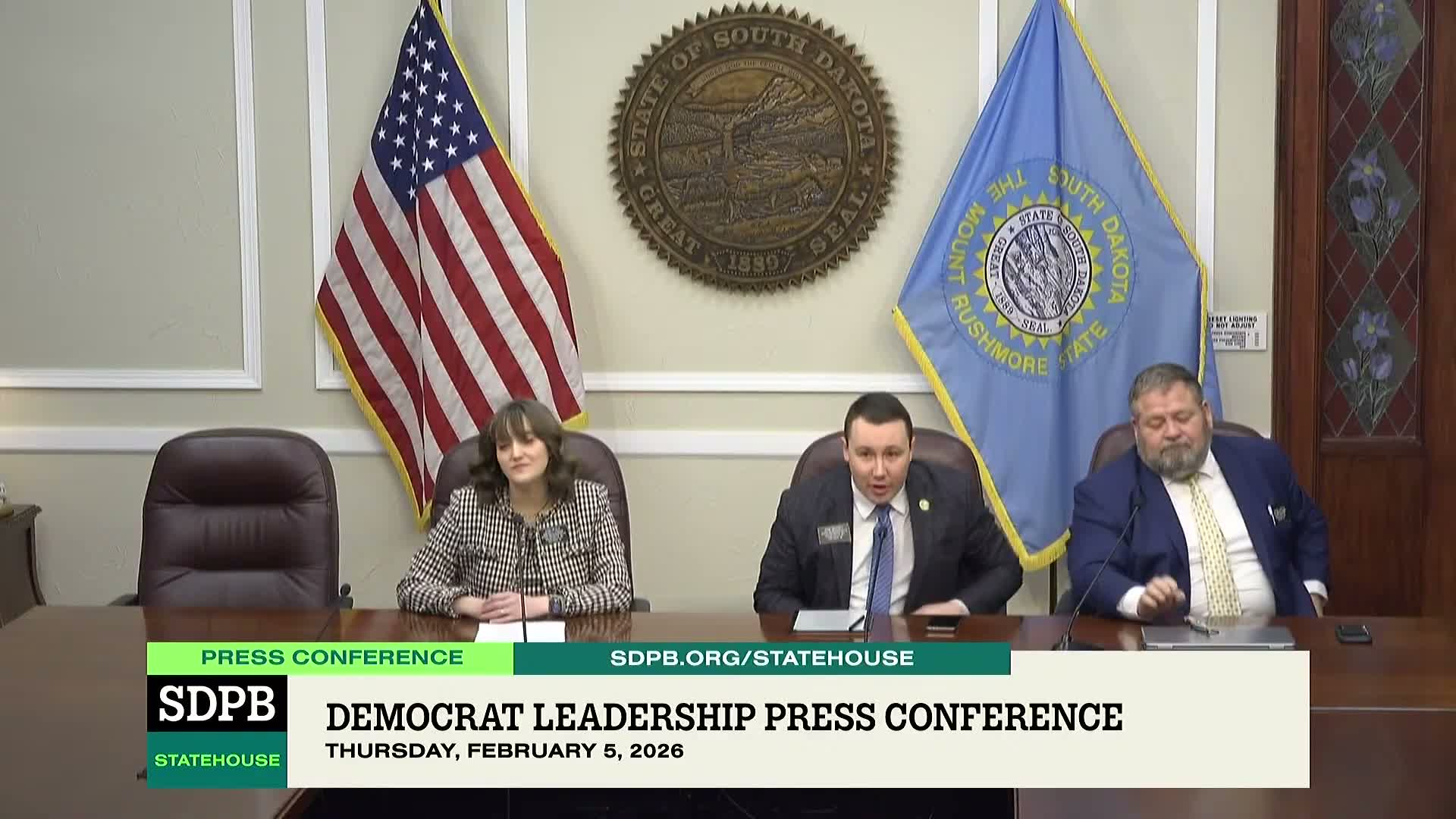
Summary
Rep. Eric Maki unveiled House Bill 1281, the "Feed Families Fund Schools Act," proposing to reduce the state grocery sales tax to 0% while creating a state school construction revolving fund and offsetting revenue changes with other tax adjustments.
Rep. Eric Maki (R‑District 15) on Tuesday introduced House Bill 1281, which he called the “Feed Families Fund Schools Act,” saying the proposal would eliminate the state grocery sales tax and create a revolving school construction fund to help districts avoid local opt‑out levies.
The bill would reduce sales tax on food and food ingredients at the state level to 0% while holding harmless municipalities and local taxing districts, according to Maki. To offset the revenue impact, he said the caucus is considering adjustments to the broader tax code — including raising the general sales tax rate and increasing the tobacco tax — and providing 0% revolving loans for school capital projects.
“If you’re going to provide targeted property tax relief solutions … you’re going to have to find a greater state share of education funding,” Maki said, framing the plan as a way to reduce regressive grocery taxes while stabilizing school capital funding.
Maki compared House Bill 1281 to the failed I‑m 28 ballot measure and said it corrects language that previously produced unintended consequences. “House Bill 1281 reduces sales tax on food and food ingredients to 0%. It does not eliminate the tax from the code, and it doesn’t eliminate a tax that counties [or] municipalities, if they so choose, would still be able to tax,” he said.
Maki said the bill includes a dedicated school construction fund that would allow appropriations each year for districts to avoid opt‑outs for capital projects. He described the approach as targeted and systemic: reducing the most regressive taxes while increasing the state role in paying for school capital to ease local property tax burdens.
Next steps: Maki said the bill will move through committee hearings and that his caucus is prepared to discuss the plan with colleagues across the aisle as the Legislature works through a heavy bill load.
Ending: The proposal will be subject to the committee and floor process; details on exact offsets, appropriation limits and implementation timing were not specified at the press conference.