Get Full Government Meeting Transcripts, Videos, & Alerts Forever!
Get email alerts on the Land Use Rezoning topic
No spam. Unsubscribe anytime.
Council introduces rezoning for 23 Alta Rinda Road after evacuation analysis and debate
Summary
The Orinda City Council unanimously voted to introduce an ordinance to rezone 23 Alta Rinda Road from office to downtown general, allowing future multifamily housing applications; the decision followed staff presentations on CEQA findings and Ladris evacuation modeling and public concerns about potential increases in evacuation time.
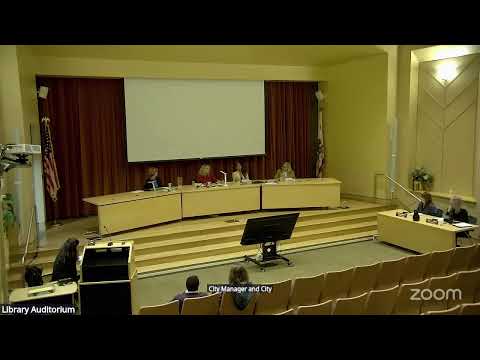
Orinda — The City Council on Monday introduced an ordinance to change the general plan and zoning for 23 Alta Rinda Road from business/professional office to downtown general, a designation that would allow mixed‑use and multifamily housing on the 0.6‑acre site.
Staff principal planner Christine Thompson told the council the site was evaluated in the city—ertified revised final EIR and that staff—ound "no environmental effects that have not already been fully examined," concluding that no supplemental EIR was required. She also presented evacuation modeling from the city—ommissioned Ladris tool to compare baseline evacuation times with scenarios that include the rezoning. "It's approximately 1 hour, 1 hour and a half to do this zone evacuation," Thompson said, and stressed the model's variability across runs and geographies.
Brian Griggs, the property owner and applicant, acknowledged residents' wildfire evacuation concerns but argued the rezoning merely preserves the option to pursue a future housing project: "By supporting the rezoning tonight, the city council will not be approving a future residential development project at 23 Alta Rinda," he said. Griggs added that his partners have balanced housing need and community concerns and that any future development would require separate discretionary approvals.
A public speaker who identified himself on the record as Nick (longtime resident) urged caution, citing the EIR supplemental analysis and a staff slide he provided to the council. He said the materials showed that adding sites identified in the housing element, "including 23 Alta Rinda Road," could add "as much as 24 to 33 minutes of evacuation time," and asked the council to weigh life‑safety implications before expanding housing designations. In public comment he asked rhetorically, "What is the value of human life?"
Council discussion emphasized the limited size and location of the property, its proximity to transit and other housing, and the value of the Ladris modeling for public education and planning. Multiple council members said the site ppears suitable for rezoning and noted that rezoning alone does not approve a concrete development. One council member underscored that the staff package included a proposed statement of overriding considerations and related findings for CEQA.
Council member (speaker S6) moved to take the actions recommended in the staff report: waive full reading and introduce ordinance 2601 to amend the zoning, and direct staff to return with two resolutions (one to amend the general plan and one to adopt CEQA findings). The motion was seconded and passed unanimously by voice vote.
What this means next: The introduction is a procedural step; if the council later adopts the ordinance and accompanying resolutions, the rezoning would become effective within 30 days. Any future development proposal on the parcel would still require project‑level review and any permits or environmental analysis that then may be needed.
Authorities and documents cited: staff presentation and packet materials including the March 18, 2025 revised final EIR, the staff consistency analysis and the Ladris evacuation modeling outputs provided to the council.
Council action recorded: The council introduced ordinance 2601 and directed staff to prepare the two resolutions for future adoption; the motion passed unanimously.