
Costa Mesa council advances self‑checkout staffing ordinance after heated public debate
Get AI-powered insights, summaries, and transcripts
Subscribe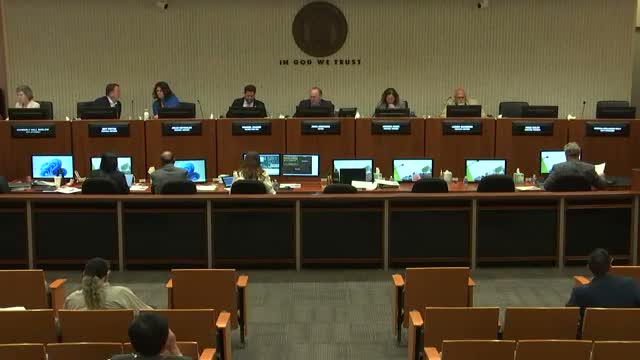
Summary
After extended public testimony from grocery workers, retailers and residents, Costa Mesa council approved a new first reading—with amendments—of an ordinance requiring staffing and signage for self‑checkout kiosks, including a 1:3 staffing ratio and a 15‑day cure period; council will review results in one year.
Costa Mesa — The City Council advanced a controversial ordinance Tuesday aimed at changing how grocery and drug stores staff self‑checkout lanes, voting 6‑0 to approve a new first reading with councilmember‑led amendments. The measure, modeled on Long Beach’s law, would require staffing of self‑checkout stations, limit unattended self‑checkout to about 15 items and carry a private right of action for enforcement.
Government Affairs Manager Barkman told the council the draft ordinance would apply to food and drug retail establishments above specified sizes and include a staffing ratio of one employee for every three self‑checkout stations, a 7‑day right to cure (proposed to be extended), signage requirements and penalties capped at $1,000. Barkman said the city would return with an update after one year.
The proposal drew a full public comment period. Workers and union representatives urged the council to adopt the measure to protect employees from being stretched thin and to improve customer service; one speaker called 1:3 a “very reasonable” staffing expectation. Retail trade groups and industry representatives warned that the measure would be burdensome, could push stores to close self‑checkout lanes, and would raise legal liability that could drive stations offline or shift shoppers to neighboring cities or online retailers.
Councilmember Arlidge Reynolds offered an amendment to soften enforcement pressure: extend the cure period from seven to 15 days, delay the ordinance’s effective date from 30 to 60 days after passage, change strict item‑limit enforcement to an emphasis on signage that states the 15‑item suggestion, and simplify the public‑notice language to retain required signage and a contact method but remove an extended rights‑summary text. Reynolds said the changes aim to preserve worker protections while giving stores clearer, less punitive directions on compliance.
Mayor Pro Tem Manuel Chavez and other council members emphasized the one‑year check‑in so the council can revisit the ordinance if it appears to harm local businesses or fail to achieve staffing gains. Councilmember Jeff Pettis said he opposed an earlier version but supported the amended motion; the council ultimately advanced the ordinance on a unanimous 6‑0 vote to begin a new first reading with the Reynolds amendments.
The council and staff noted a pending state bill (SB 442) addressing related issues; Barkman said the current draft includes language to preserve local rules that are equal to or more protective than state law. Councilmembers asked staff to track Long Beach’s implementation results and to report back at the one‑year review. The new first reading does not yet impose fines or compel immediate operational changes; staff will return with final ordinance language and an implementation timeline.
What’s next: The council advanced a new first reading with amendments. Staff will draft final ordinance language incorporating the council’s direction, coordinate with legal and finance for implementation details, and return to council for the next steps and the one‑year follow‑up.