Get Full Government Meeting Transcripts, Videos, & Alerts Forever!
Get email alerts on the Land Bank And Housing Incentives topic
No spam. Unsubscribe anytime.
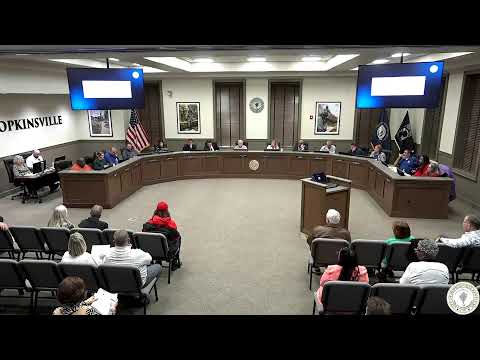
Hopkinsville council hears land bank update, approves revised incentives for legacy neighborhoods
Summary
Council received an update on the Land Bank Authority’s work to clear and redevelop vacant lots and approved new incentives aimed at single‑family and multifamily construction in legacy neighborhoods, with rebates increased and new timelines and application requirements.
City staff and the Land Bank Authority told Hopkinsville City Council on Feb. 3 that the land bank is positioned as a key tool in the city’s housing strategy — focused on returning vacant, abandoned and deteriorated lots to productive use.
Troy Boddy, the city’s representative and land bank chair, said the authority has shifted emphasis toward housing in response to a shortage and touted partnerships with developers. “Without housing, we won’t accomplish it,” Boddy said, urging a citywide strategy that coordinates land bank activity with economic development.
Holly Boggess provided a history of the Land Bank (created in 2007) and explained the statutory framework that governs disposals and developer selection. She described requirements the land bank follows: public notice in the newspaper, a minimum seven‑day bidding window, established pricing and development conditions, and the need for a development plan rather than speculative purchase. Boggess also said 48 properties transferred from the land bank since 2020 and that 33 different individuals or organizations have received property over the last decade.
Council then considered recommendations from the Legacy Hopkinsville committee to simplify and increase incentives that aim to spur infill housing in designated legacy neighborhoods. Municipal Order O4-2026 replaces the single‑family new construction incentive with a $7,500 rebate per unit (up from $2,000), adds requirements such as a floor plan and project timelines (two months to obtain a building permit, three months to begin construction), and removes items that were confusing or not applicable. Municipal Order O5-2026 revises duplex and multifamily rebates to a $3,000–$5,000 range with conditions (e.g., two bedrooms per unit, vegetative buffering, rear parking) to qualify for the higher rebate.
Council and staff discussed access to program information; city staff said they maintain an email notification list (about 291 subscribers) and that developers can pay a $120 per‑property processing fee to bundle an RFP when pursuing multiple properties. Residents raised concerns about developer concentration of multiple parcels; staff replied that bundled RFPs require development plans and contractual commitments and that some developments will include rent‑to‑own units.
Both municipal orders were moved, seconded and approved; funding for the incentive programs will be taken from funds budgeted for the inner‑city/legacy program and may require future budget amendments, a council member warned.