Get Full Government Meeting Transcripts, Videos, & Alerts Forever!
Get email alerts on the Council Compensation topic
No spam. Unsubscribe anytime.
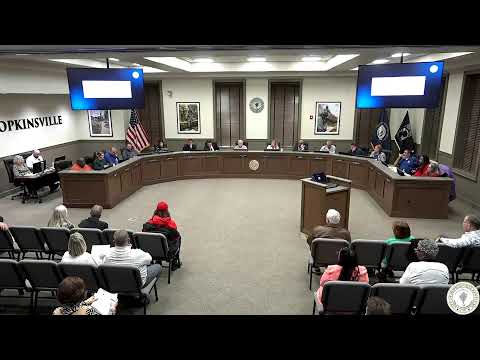
Hopkinsville City Council approves pay increase for mayor and council after heated public comment
Summary
After extended public comment and internal debate, Hopkinsville City Council voted to amend its classification and compensation ordinance, raising council salaries to $22,000 beginning Jan. 1, 2027; the measure passed after a recorded roll-call vote with several members opposed and one abstention.
Mayor James R. Knight Jr. and Hopkinsville City Council voted on Feb. 3 to amend the city’s classification and compensation plan, increasing annual pay for council members to $22,000 effective Jan. 1, 2027, and updating mayoral salary authority in line with state guidance.
The vote capped more than an hour of debate and a string of public comments opposing large increases. Jamie Weinberger, a resident and frequent public commenter, told the council: “I stand before you today to respectfully ask that we reconsider the proposed almost 59% salary increase for the Hopkinsville City Council.” Tiffany Pittman, a former elected official and candidate, said raising pay now risks public trust: “Public service is about sacrifice, not salary.” Mark Graham warned the proposal sends the wrong message to constituents, saying “When community members hear the elected officials are discussing giving themselves a 57.14% increase, it sends a message.”
Supporters on council and staff framed the change as bringing elected pay closer to market and county partners and as a way to broaden who can afford to serve. A council member who defended the ordinance noted the statutory process limits council to setting pay for the next term and pointed to a Department for Local Government maximum mayoral salary figure when explaining legal constraints.
The ordinance (Chapter 30.02 amendment) was debated line by line. Questions from council and members of the public focused on statutory authority, conflict‑of‑interest concerns, budgetary impact and whether a phased or stepped approach might be preferable to an immediate jump. Council members discussed the city’s reserve position and whether the increase would require budget amendments; proponents argued the change would not create a financial burden in the near term and could increase diversity among candidates by compensating service more fairly.
On the final roll-call vote the ordinance passed. Recorded votes on the approval were: yes — Craig, Martin, Sumner, Meek, Bogard, Bell, Smith; no — Marsh, Crabtree, Velez, Droude; abstain — Salins. The ordinance will take effect Jan. 1, 2027, as written in the amendment.
Next steps: the council’s amendment updates the compensation schedule in city code and will be reflected in next year’s payroll calculations; council members and city staff said they will monitor budget impacts as the fiscal year progresses.