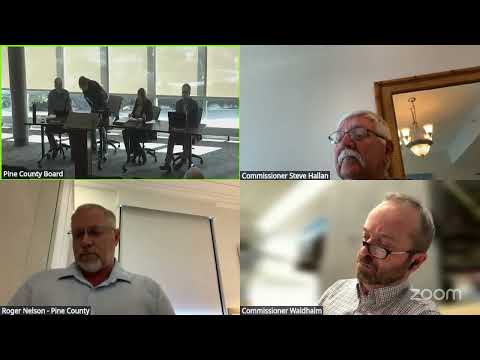
Neighbors and operator clash over cannabis facility lighting and compliance in Pine County
Loading...
Summary
Public commenters urged Pine County to enforce light and odor mitigation at a licensed cannabis facility after residents produced permit paperwork they say shows a large planned increase in greenhouse lighting; the operator said state inspectors praised the site and invited further inspections.
Joe Zappa, an operator identified as representing IRBA, told the Pine County Board during public forum that his licensed cannabis business has invested more than $1,000,000 with local vendors and employed more than 10 local people, and asked the board to rely on inspection facts rather than recent news coverage. "We intend to meet that if not exceed your expectations as we continue forward," Zappa said, noting state inspectors encouraged showing the facility as an example of compliance.
Neighbor Denise Weis Graston disputed parts of the county's facts and findings on lighting and said she had complained previously to county staff. Graston said permit documents she obtained from the state show Greenhouse No. 4 currently had "166 hundred-watt HPS lights" and proposed adding 336 400-watt LED fixtures, which she summarized as a large increase in wattage and light output she expects will increase light pollution. "So you have 96,000 watts. You're going to add an additional 134,000 watts that equals 230,000 watts in Greenhouse Number 4 alone," Graston said to the board, and she urged the county to require light and odor mitigation in future compliance work.
Lehi Orvis, representing Royalton Township, told commissioners the township had followed the law and pushed back on what he described as inaccurate newspaper coverage. Orvis argued an administrative rule cited in public reporting relates to business security rather than grow lighting, and said the township's processes were lawful and appropriate.
County zoning staff and the board discussed next steps: staff said zoning responses and findings were based on the files and that staff had copied stakeholders on communications to show a closed loop. The operator said he has invited the sheriff for a site tour to address security concerns. The board did not take formal action during public forum, but members agreed to continue communication between township and county staff and monitor compliance follow-up.
Why it matters: The dispute centers on how the county interprets and enforces zoning and licensing rules for indoor cannabis production, and on neighbor concerns about light and odor that affect nearby residents. The county's handling of complaints, the accuracy of permit records, and any mitigation measures could set precedents for other operations and neighborhoods in Pine County.
What's next: Board members encouraged continued direct communication between township representatives, zoning staff and the county administrator; no regulatory change or new permit condition was adopted at the meeting.