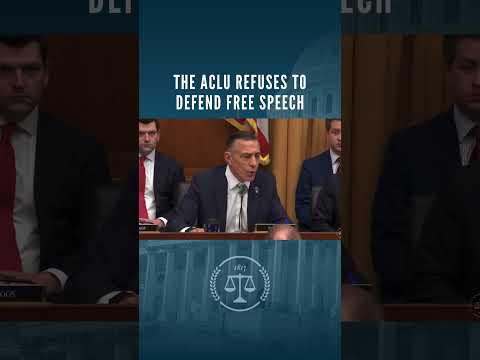
Unidentified speaker at House Judiciary hearing questions First Amendment’s global reach, lashes out at ACLU
Loading...
Summary
An unidentified speaker at a House Committee on the Judiciary hearing argued the First Amendment should not be treated as having global reach and accused the ACLU of failing to defend free speech over the past four years, calling the group partisan. No response appears in the transcript.
An unidentified speaker at a hearing of the House Committee on the Judiciary challenged the idea that the U.S. First Amendment should have a global reach, saying the question before the panel was whether someone who speaks in America but is a citizen of another country can be arrested in a third country for speech made in the United States.
“The fact is you’ve come here for a hearing that was about whether or not the First Amendment should have a global reach,” the unidentified speaker said, arguing the panel should focus on whether U.S. speech can trigger foreign prosecutions.
The speaker also criticized a witness for not answering the chairman’s question, saying that when asked by the chairman the witness “go dumb,” and then turned the remarks toward the American Civil Liberties Union. “Shame on the ACLU,” the speaker said, adding, “You didn’t protect the First Amendment under the last 4 years, and now you come here with the hypocrisy of all time to pretend that the ACLU hasn’t become an arm of the Democratic Party.”
The transcript provided ends with those accusations; no response from the panel, the chairman, or representatives of the ACLU is recorded in the available segments.
The speaker’s comments raise the procedural and constitutional question of whether and how U.S. free-speech protections should be interpreted or applied beyond U.S. borders — an issue with potential implications for foreign-born speakers, U.S.-based advocacy organizations and cross-border law enforcement. The excerpted transcript does not record testimony from ACLU representatives or any formal vote or action on the matter.