Get Full Government Meeting Transcripts, Videos, & Alerts Forever!
Get email alerts on the Housing Multifamily topic
No spam. Unsubscribe anytime.
Town planning retreat: Board debates when to say no to multifamily; staff urges clear reasons for denials
Summary
At a Huntersville planning retreat, board members debated how selective the town should be on multifamily rezonings amid a large pipeline of approved units; staff advised that denials must be grounded in consistency and reasonableness statements to avoid arbitrary decisions.
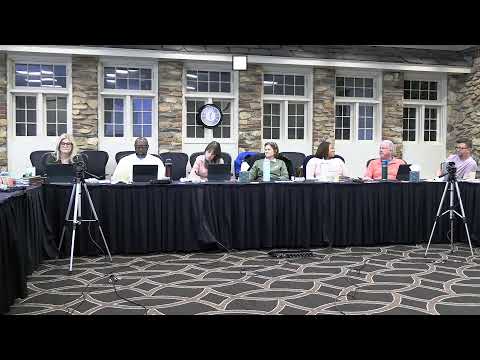
The Town of Huntersville’s day‑two planning retreat on Jan. 30 focused in part on how the town should respond to a large multifamily development pipeline.
Board members said the town does not need to approve every multifamily project now that roughly 3,000–4,000 multifamily units sit in the approvals inventory. One member asked whether the town should approve only the highest‑quality projects, calling for better design and community fit; Speaker 1 framed the question: "Is it necessary to approve every multifamily that comes even if unless they're a sparkly unicorn?" Unidentified Speaker 6 agreed that selectivity is appropriate and encouraged pushing developers for high design and affordable units.
Planning staff cautioned that denials must rely on substantive standards. Unidentified Speaker 9 (planning counsel/staff) reminded the board that a denial vote must include a "reasonableness statement and a consistency statement" tied to the community plan and zoning standards, and cannot be arbitrary or capricious. "It has to be a legitimate reason as to why you are saying no," Speaker 9 said.
Staff and board members discussed practical constraints: many multifamily approvals are concentrated in Brighton and other areas with underlying assumptions (for example, some approvals anticipate future transit). Staff noted that of the roughly 4,000 multifamily units in the inventory, about 1,000 are 'ghost' units tied to Brighton and likely to remain dormant until major infrastructure (the train) comes online.
What’s next: staff said applicants will continue to bring rezoning requests and that when the board considers denials it should articulate clear findings linking the decision to the community plan and applicable ordinances. No formal motions or votes on any specific rezoning were recorded in the transcript excerpt.
This article is based on the retreat discussion and staff advice delivered at the meeting.