Get Full Government Meeting Transcripts, Videos, & Alerts Forever!
Get email alerts on the Land Use Policy topic
No spam. Unsubscribe anytime.
Whiteland staff begins talks on unified development ordinance to update zoning rules
Summary
Town staff reported preliminary work to draft a Unified Development Ordinance (UDO) to update zoning language, clarify design standards, and reduce routine variance requests; no timeline or firm procedural steps were set at the meeting.
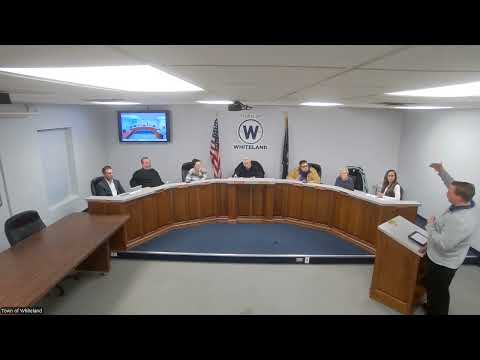
Town staff told the Board of Zoning Appeals that preliminary discussions have begun to craft a Unified Development Ordinance (UDO) for Whiteland intended to modernize zoning language and align it with the town’s comprehensive plan.
Bill, the town staff presenter, said staff and the town manager “were looking at doing is incorporating, a UDO,” and noted the comprehensive plan completed in 2024 is typically followed by UDO drafting. He described the UDO’s purpose as making zoning language more explicit, updating design standards and construction specifications, and reducing the number of small, repetitive variance requests that come before the board.
Staff emphasized the UDO would address specific items that have repeatedly required variances — for example, the current ordinance’s material standard that specifies 75% “Breakers Stone,” which staff said does not use broader masonry language. Bill said the town has seen changes in building materials and development patterns and that many Johnson County communities use a UDO; he said Whiteland’s goal is to make standards clearer and more practical.
Board members asked whether changes would impose higher standards on existing neighborhoods; staff responded that the UDO's intent is clarity and predictability rather than retroactive imposition, and noted adoption steps would follow municipal procedures (potentially including council and planning commission review). No timeline was provided; staff said preliminary talks had just started and that an outside consultant may help draft the ordinance.
The discussion was framed as long-term planning work rather than an immediate regulatory change. Staff asked for the board’s support in reducing docketed variances by clarifying code language and stated the UDO would be designed to reduce administrative burden and provide clearer guidance for residents and developers.
No formal action was taken at the meeting; staff said additional outreach and formal drafting steps would follow internal scoping and consultation with external parties.