Etech reviews growth-monitoring data: multiunit housing outpaces single-family; employment land lags
Loading...
Summary
City staff told Etech that multiunit development accounted for most permit activity over the monitoring period, with about 953 dwellings built per year on average and 75% of new units in multiunit buildings; staff also flagged that employment acreage and industrial permits are well below forecasts and outlined a schedule for deeper urban growth strategies work.
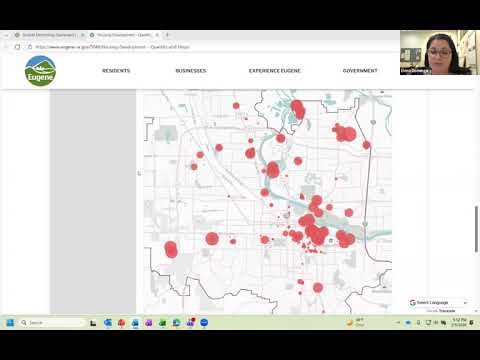
Elena (staff member) opened Etech’s February meeting by presenting the city’s growth-monitoring annual report and the permit chart that, she said, shows an average of “953 dwellings per year between 2013 and 2025,” compared with an adopted forecast average of 755 dwellings.
The data show housing growth concentrated in multiunit development. "Across the monitoring period it was about 21% single unit, 4% middle housing, and 75% multi unit," Elena said, and staff noted that roughly 31% of those multiunit permits were identified as student-oriented. Staff estimated the city has met about 84% of its overall housing need, driven primarily by multiunit production (about 250% of the multiunit need met versus 32% for single-unit and 18% for middle housing).
Why single-family production lagged: staff and committee members cited several causes. Heather (staff member) said a substantial share of the single-unit forecast sits on unserved or unannexed land and that steep slopes, poor soils and geotechnical constraints make some parcels unlikely to develop in a 20-year planning horizon — what staff described as "phantom capacity." Heather said new state rules will allow the city to deduct a portion of non-developable inventory in the next UGB analysis.
Developers’ economics and earlier planning assumptions also matter. John (committee member) noted that an earlier planning scenario assumed roughly a 50/50 split between single-family and multifamily — an assumption the group said skewed expectations; staff and members agreed market forces and the relative cost of developing steep lots favor multifamily on smaller parcels.
Staff reviewed the efficiency measures the city is tracking — downtown programs, rezoning and density changes, affordable-housing land bank sites, property-tax exemptions, accessory dwelling unit policies and SDC (system development charge) credits — and cautioned that measuring the separate effect of any single tool is difficult. Heather said the city is considering programmatic approaches (for example, deferring SDC payments until occupancy) to reduce upfront costs for builders and to better evaluate what incentives work.
On employment and industrial land, staff reported much weaker results. "Employment permits have averaged about 40 per year since 2013," staff said, and only a fraction of forecasted employment acreage has developed. Committee members urged elevating infrastructure and servicing needs for industrial areas, noting staff sought state funding for Clear Lake and that Crow Road received a state infrastructure grant and was annexed last year — steps staff said should enable development once utilities are extended.
Staff acknowledged limits of permit-based data for assessing jobs and wages: building permits do not record the number or wage class of jobs created and tenant-improvement permits only partially reveal changes in employment density. Heather said the forthcoming economic-opportunities analysis will dive deeper into job types and wages, and that updated employment data from LCOG (Lane Council of Governments) are expected but not yet available.
The committee also discussed population and demographic context: Portland State University’s population forecast (provided every four years) shows slower projected growth than the city’s current adopted forecast, and staff noted Lane County’s older age profile will influence housing need and services going forward.
Next steps: Heather presented a draft meeting schedule for the urban growth strategies (UGS) work, saying staff would likely cancel the Feb. 19 and March 5 meetings and return on March 19 with housing-affordability data and a truncated annual report; the committee will then focus on UGS tasks — capacity analysis, efficiency measures, and the employment and economic-opportunities work — through the remainder of the year. Staff committed to posting data and maps to the public dashboard and to sharing the draft schedule with committee members.
The meeting closed after roughly two hours with members thanking staff and encouraging continued outreach to policy makers about servicing and development constraints.