Get Full Government Meeting Transcripts, Videos, & Alerts Forever!
Get email alerts on the Wetlands Crossing Public Hearing topic
No spam. Unsubscribe anytime.
Torrington commission calls for public hearing on Highland Avenue wetlands crossing; applicant told to explore narrower crossing and mitigation
Summary
The Torrington Inland Wetlands Commission on Feb. 3 determined wetlands permit application WP26‑1 (1685 Highland Ave, applicant Riley Shredders) is a significant activity requiring a public hearing after engineers said the proposed driveway would fill under 3,000 sq ft of wetland and use two 15‑inch culverts; commissioners asked for alternative alignments and mitigation options.
The Torrington Inland Wetlands Commission voted Feb. 3 to classify a proposed wetlands crossing and single‑family home at 1685 Highland Avenue as a significant activity and to require a public hearing for wetlands permit WP26‑1.
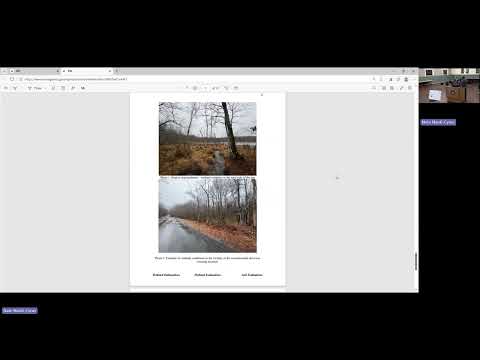
Bill Holby of Holby Engineering, speaking for applicant Riley Shredders, described the proposed access and said wetlands on the parcel were flagged by Ian Cole, a certified soil scientist. Holby said avoiding wetlands on the parcel would require blasting ledge; he proposed a driveway alignment that he said was the least intrusive in field conditions and estimated “a little less than 3,000 square feet of filling of the wetland” to construct the crossing. Holby also said the proposal called for two 15‑inch culverts to carry flow under the driveway, a 12‑foot driveway width and that utilities would be run underground alongside the driveway.
Holby said the septic system and leach field fall inside the regulated area but that Torrington Area Health had approved the design. He described erosion and sediment controls including silt fence and protected stockpiles; the applicant also indicated a preference for temporary measures across the wetland crossing during construction.
During questioning commissioners and staff discussed alternatives. The commission examined whether a narrower crossing near a stand of mountain laurel—identified in the consultant’s report—would reduce wetland fill; engineers noted moving to the narrower point could reduce crossing length from about 70 feet to roughly 35 feet but could increase disturbance in the upland regulated review area and may require blasting or removal of laurel. A speaker identified in the record as Riley Shredders recommended using straw bales rather than hay bales in erosion controls, citing state erosion and sediment (E&S) guidance that prefers straw to avoid spreading invasive seed.
Commissioners and staff asked the applicant to provide more detailed crossing views and mitigation options before the next meeting. Staff suggested possible compensation for any wetlands filling—examples included rain gardens at roof discharges or infiltration of footing drains and roof leaders—to reduce net impacts. After discussion a motion passed to declare the application a significant activity and to require a public hearing; recorded votes included Commissioners Christine Altman, Adrian, Jeremy deCarly and Steven Ivan voting in favor.
Next procedural steps: a public hearing will be scheduled; the applicant is to provide more detailed crossing drawings comparing the proposed and narrower alignments, updated wetland impact calculations, and any proposed mitigation or compensation measures for the commission’s review before the hearing.