Get Full Government Meeting Transcripts, Videos, & Alerts Forever!
Get email alerts on the Article 46 And Child Nutrition topic
No spam. Unsubscribe anytime.
Officials outline Article 46 sales tax referendum and Child Nutrition finances; county earmark of $130,000 questioned
Summary
Gates County leaders described a proposed Article 46 sales tax referendum to support food security and school nutrition, presented December child nutrition results (net profit $4,321.94) and discussed whether a $130,000 county earmark remains necessary given federal grants.
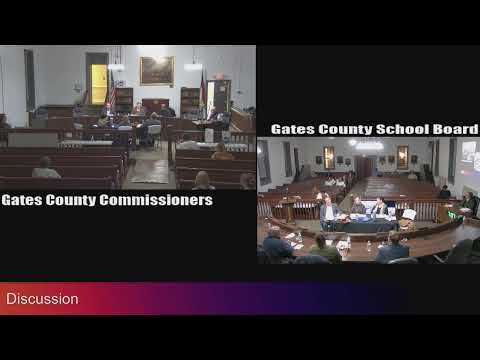
GATES COUNTY ' County and school officials used a joint work session to explain Article 46 (a sales tax referendum), present child nutrition financial results and discuss whether an earlier $130,000 county earmark for school meals should be repurposed.
Article 46 and public outreach: Officials described Article 46 as a sales tax referendum that will appear on the March 3 primary ballot as "Article 46" (voters will see only the article label, for or against). The chair provided a conservative estimate that Article 46 could generate roughly $175,000 to $200,000 for Gates County if approved and announced a public town hall on Feb. 24 at 7 p.m. in the high school Performing Arts Center to answer citizen questions.
Child Nutrition finances: The board read Dr. Simpson's December 31 report showing Child Nutrition had a net profit of $4,321.94 when county grant funds were excluded. Participation data shared at the meeting put district-wide participation in December at 66.06 percent; breakfast participation fell from 74.46 percent in November, and lunch participation slipped to 76.05 percent from 82.6 percent in November. The reported labor-to-revenue ratio for December was 49.45 percent and the food-cost-to-revenue figure was reported at about 47.04 percent. The report recommended longer cycle menus (two to three weeks), increased a la carte sales at the high school and monitoring food waste to improve financial performance.
County earmark: A commissioner asked how the county'earmarked $130,000 had been used. Officials said the federal grant that funds much of the program has allowed Child Nutrition to show a profit and self-sustain, and that the board will examine whether the county'earmarked $130,000 should be removed or redirected depending on program sustainability and other county priorities.
Cost to taxpayers: Meeting discussion included an example figure for the local cost of the sales tax: officials said the effect would be about $25 for every $10,000 of taxable spending (as explained during the meeting); they stressed the ballot label will read only "Article 46" and that outreach materials and a Feb. 24 town hall will explain local uses if voters approve it.
Next steps: The board asked that the child nutrition report be scanned and circulated to members, and officials said they would publish more informational materials about Article 46 and hold the Feb. 24 town hall prior to the March 3 primary.