Get Full Government Meeting Transcripts, Videos, & Alerts Forever!
Get email alerts on the Family Law Asset Division topic
No spam. Unsubscribe anytime.
Appeals panel reviews divorce ruling that ordered large pension share and sanctions
Summary
In Kankade v. Kankade (20P684) the appellant challenged a trial court order compelling a 100% joint-and-survivor annuity election and transfer of 65% of the central pension fund, arguing those measures unfairly reduced his income; the appellee defended the award as an equitable response to alleged dissipation and sanctions.
Justice Peter Sachs presiding. The court considered multiple challenges in a divorce appeal, including the trial judge’s order that the husband elect a 100% joint-and-survivor annuity and transfer 65% of his central pension fund interest to the wife, fines for a missed trial day and the allocation of insurance and tax obligations.
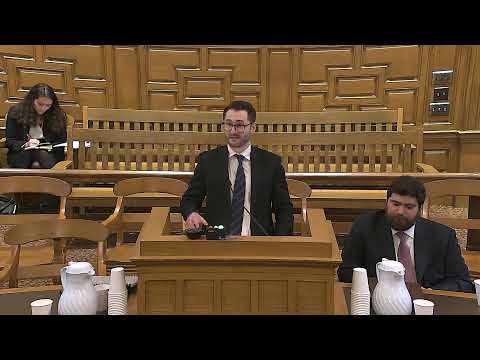
Appellant counsel Jake Lopez said the combined effect of the pension split, compelled annuity election and sanctions is unduly burdensome given the husband’s retirement, reduced monthly income and outstanding debts; he urged the court to find an abuse of discretion in the weight assigned to alleged dissipation and the required annuity election.
Appellee counsel Chris Herbert responded that the trial court properly exercised broad discretion under the equitable-distribution statute, accounting for dissipation, the parties’ relative needs and the QDRO process that will govern precise pension implementation. Heralding the trial court’s factual findings, counsel said the order will produce a monthly division of benefits (about $1,200 estimated) with 65% allocated to the wife during the husband’s life and full benefit to the wife thereafter under the court’s reading.
The panel questioned what difference a percentage assignment in the pension makes when a lump-sum option is not available and whether the sanctions award was proportional and supported by record documentation. The court reserved ruling.