Appeals court weighs whether diary can serve as "first complaint" in sexual-assault prosecution
Loading...
Summary
In 24P647 counsel for Robert Albert argued the trial court erred by admitting a victim's diary entry as "first complaint" evidence, while the Commonwealth urged deference to trial-court discretion and fact-specific analysis under King and related precedent.
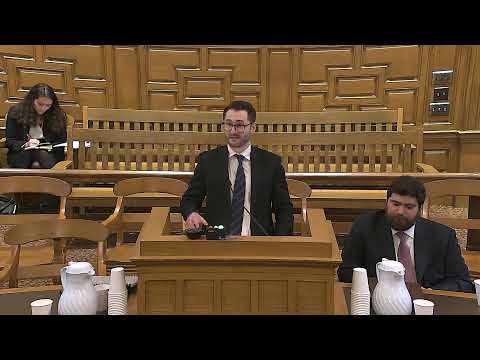
Justice Peter Sachs presiding. The court heard argument in Commonwealth v. Robert Albert (24P647) over the admission of a victim’s diary entry as "first complaint" evidence. Defense counsel James McKenna argued the diary entry was distinguishable from a communication to a third party and risked impermissible self-corroboration; he said the sister’s nod to a question was the true first complaint the doctrine contemplates.
McKenna told the panel that King and its progeny require a recipient or recipient-like fixation of a complaint and that admitting a private diary entry allowed the prosecution to "pump up" the evidence without the limiting protections the first-complaint rule supplies. He warned of prejudice when an exhibit goes back to the jury and when a writing contains multiple paragraphs of descriptive detail not conveyed to a third party.
The Commonwealth—through counsel Rachel Eisenhower—urged the court to permit trial judges discretion to assess each communication’s nature and context, and argued that some writings (letters, texts) can function as transmissions; she emphasized juries and trial judges should weigh circumstances, and that the doctrine’s objective is corroboration, not a rigid format.
Justices probed the risk that a diary could be composed in anticipation of litigation, the differences between an oral disclosure fixed in time and a written entry, and whether jury instructions and limiting instructions mitigate prejudice. The panel asked whether a bright-line rule is appropriate or whether the trial judge’s fact-specific discretion should stand.
No decision was announced from the bench.