
Plattting board approves Vanda Valley subdivision with pedestrian-access condition
Get AI-powered insights, summaries, and transcripts
Subscribe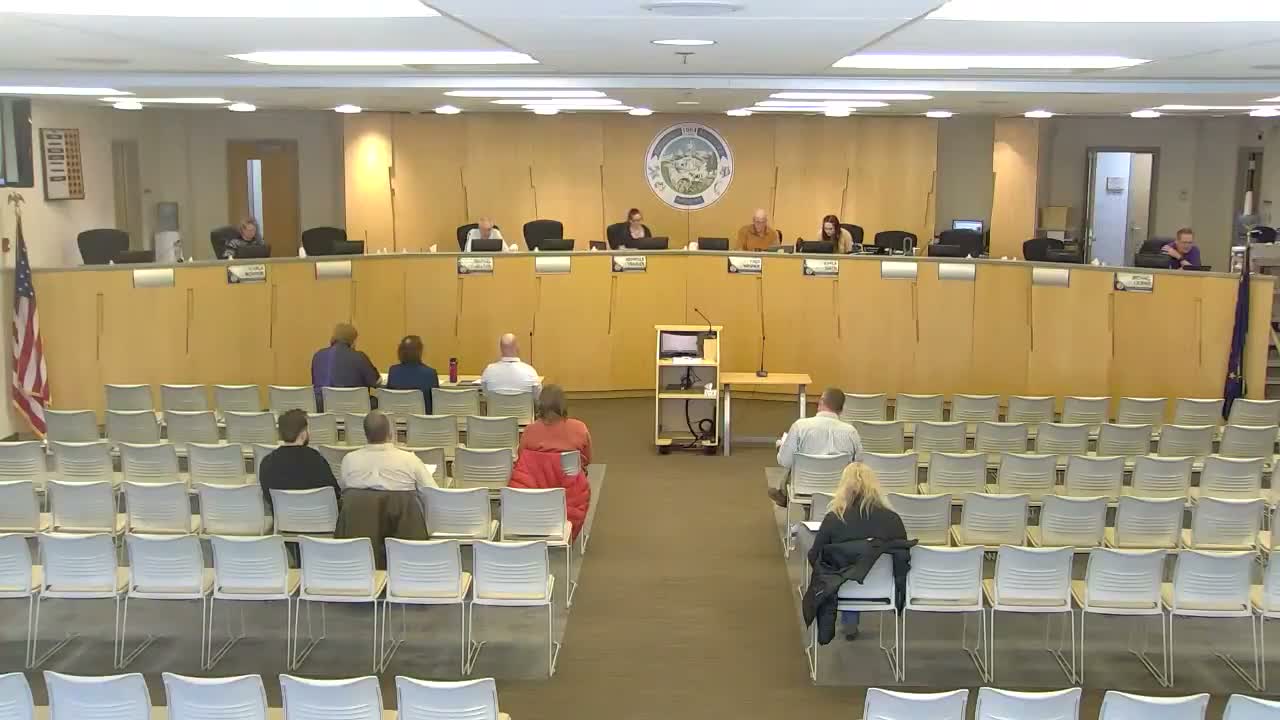
Summary
The Matanuska-Susitna Borough Platting Board approved the Vanda Valley preliminary master plan—37 lots on roughly 49.3 acres—and granted the petitioner’s variance, adding a tenth condition requiring construction of pedestrian access meeting borough code near nearby schools.
The Matanuska-Susitna Borough Platting Board on Feb. 4 approved the Vanda Valley preliminary master plan and granted a variance to borough subdivision standards, contingent on staff-recommended conditions and an added requirement that the developer construct pedestrian access meeting MSB 43.20.060(e).
Planning staff presented the proposal, saying the Vanda Valley MSP would create 37 lots and one tract totaling about 49.29 acres and that a geotechnical study of 10 borings found groundwater in two holes but concluded all lots meet minimum buildable-area and septic-area requirements. Chris Kerlin, planning staff, told the board that state and borough standards for lot area and septic were met and that several agencies had reviewed the plat; ADOT suggested a pedestrian access easement to connect phases and improve student connectivity to Shaw Elementary and the planned Birch Street charter school.
The North Lakes Community Council, represented by Rod Hansen, urged the board to require stronger review of the traffic analysis and to require internal pedestrian pathways because the site sits across from Shaw Elementary and is near a future school. "We fundamentally question some of the logic behind the current analysis," Hansen said, arguing the Caribou–Charlie–Mariah corridor already exceeds design capacity and that the traffic study needs clearer assumptions and borough oversight.
The petitioner’s surveyor, Craig Hansen, told the board the petitioner agreed to staff conditions but opposed a major, late-stage redesign of the plat to add substantial pedestrian infrastructure. "I think it would be kind of unfair to the petitioner to now suddenly turn around and say we need to change everything," Craig Hansen said.
During deliberations, planning officer Fred Wagner proposed adding a tenth condition requiring the petitioner to provide and construct access meeting borough code for pedestrian safety near schools; Wagner described the omission as a staff oversight and said it could be handled as a condition rather than deferring the plat. The board amended the motion to add the tenth condition; the amendment was seconded and approved. After questions about who supplies traffic counts and PD&E’s review role, Wagner explained the petitioner supplies traffic counts and PD&E reviews them, and PD&E did not formally object in this case.
The board then approved the main motion—granting the variance and approving the preliminary master plan subject to the ten conditions of approval.
The board’s action requires the petitioner to meet the listed conditions before final recordation; staff noted recording will be limited to Phase 1 until the extension of Foxtrot Avenue to Paradise Lane is complete. The decision also leaves open PD&E review and implementation details for the pedestrian access, which the board required as a condition of approval.