Get Full Government Meeting Transcripts, Videos, & Alerts Forever!
Get email alerts on the Surplus Property Policy topic
No spam. Unsubscribe anytime.
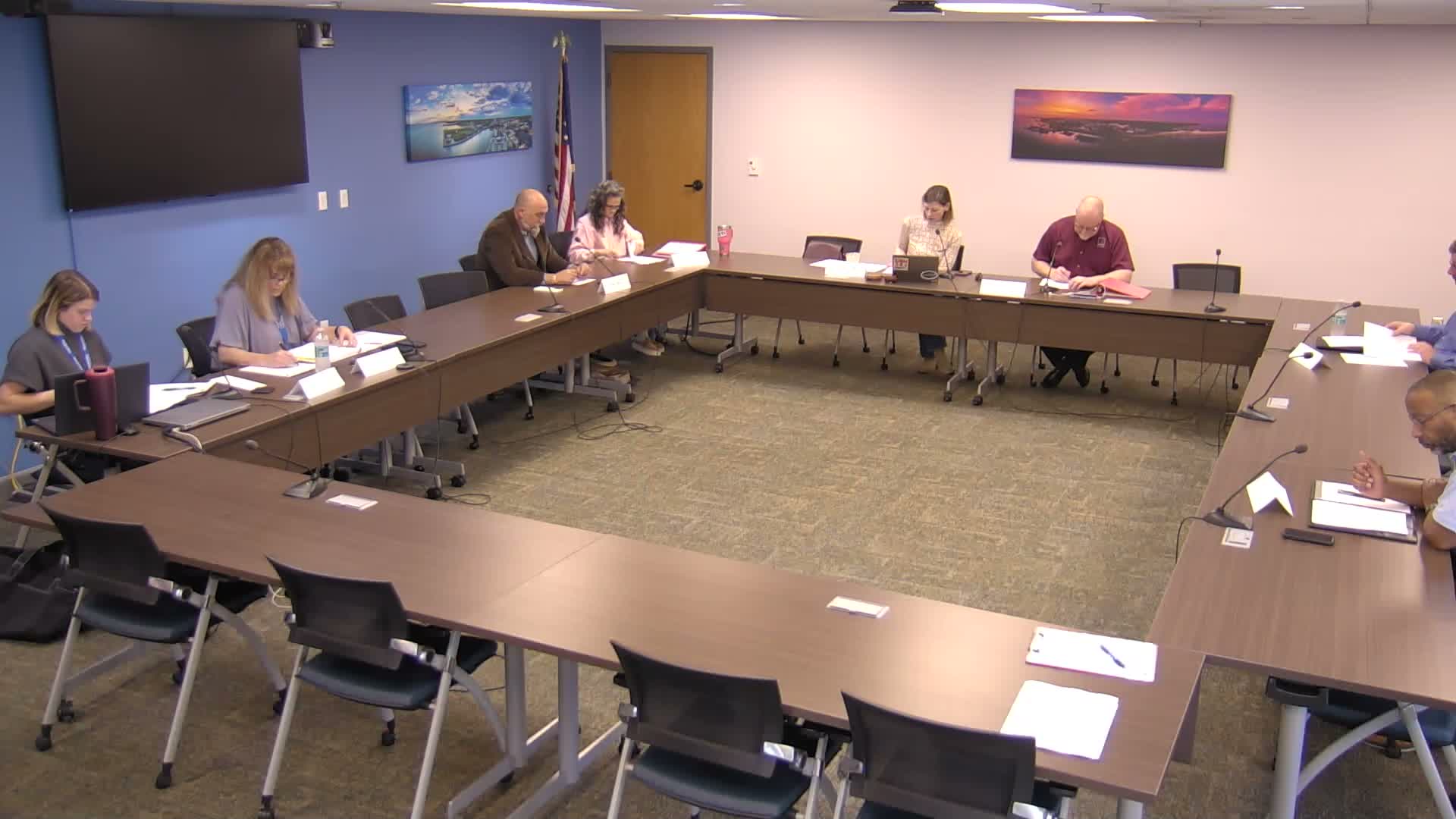
Pensacola committee urges rewrite of surplus-property rules to favor affordable housing
Summary
Committee members reviewed the city's disposition-of-surplus-property policy (last revised 2017) and recommended staff draft revisions to create an explicit affordable-housing disposal pathway, coordinate with the city administrator, and identify a city-council champion for formal adoption.
The committee discussed revisions to the City of Pensacola's disposition-of-surplus-real-property policy, with members saying the existing options do not reliably produce affordable housing and recommending a clear, written path that prioritizes affordability.
At the meeting, the chair said she had reviewed guidance from the Florida Housing Coalition and noted that the state statute "states that anything that is suitable for affordable housing should be used for affordable housing," framing the review as an effort to reconcile state guidance with the city's current disposal options.
Members pointed to the practical effect of open-bid sales and RFPs, arguing those approaches often favor the highest bidder and can exclude affordable developers. Paul Rich, representing the City of Pensacola Planning Council, described a past RFP near Ramana and 9th Avenue that included workforce-housing requirements but remained vacant years later, underscoring limits to RFP conditions without follow-through.
Several members proposed creating an explicit affordable-housing disposal option or revising the residential lot purchase program (option E) to include specific affordability criteria and incentives. Ed Brown and others said the city's economic-development criteria'which require job-creation at roughly 130% of median income'can rule out affordable projects for parcels designated under that option.
Tracy Pickens (City of Pensacola Housing) said staff would compile the committee's recommendations and share them with city administration. Committee members agreed that identifying a council sponsor would be necessary because a council resolution would be required to adopt policy changes.
Members also discussed complementary work on acquisition policy, noting that how the city acquires property affects possible disposition outcomes. The committee agreed to ask staff to draft recommended language and to place acquisition-policy review on a future agenda.
The chair summarized the next steps: staff will draft proposed revisions reflecting the committee's suggestions, coordinate with other departments, and return with a draft; the committee will seek a council champion to carry the change through the resolution process.
The committee approved the December minutes by voice vote earlier in the meeting; no further formal actions were taken on the disposition policy at this session.