
Subcommittee backs bill requiring small decals to warn firefighters about engineered trusses
Get AI-powered insights, summaries, and transcripts
Subscribe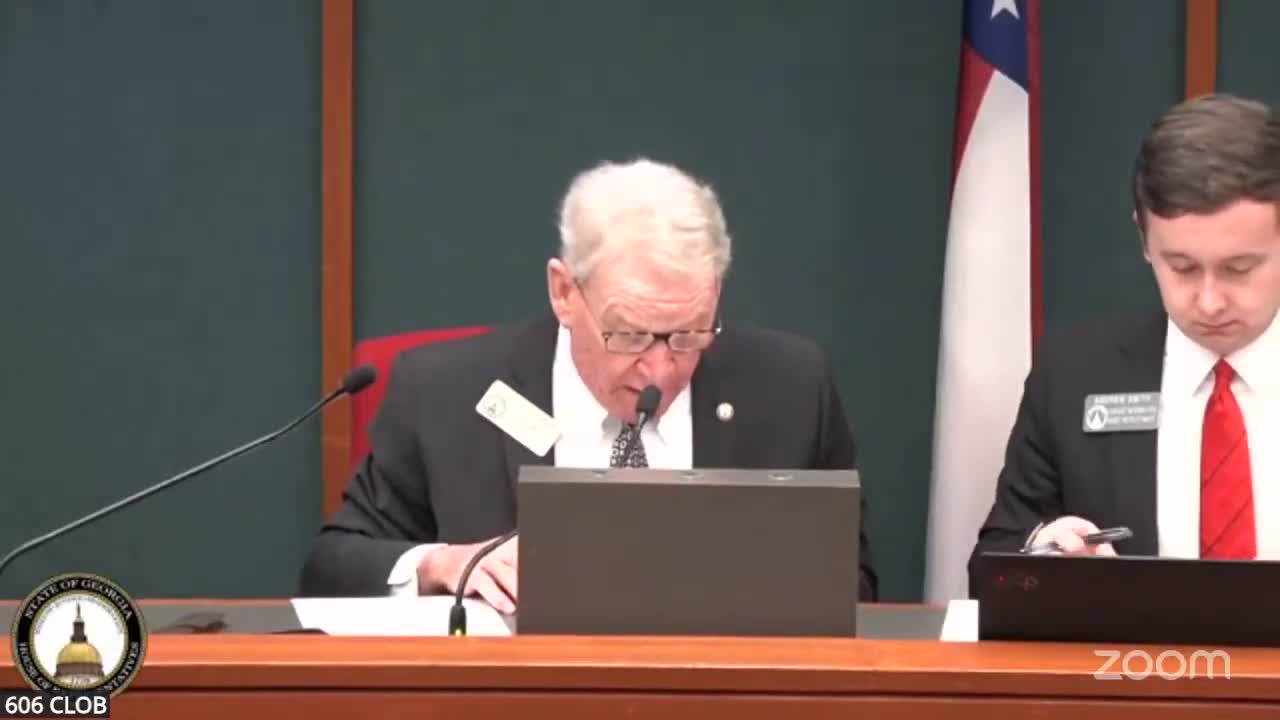
Summary
A subcommittee recommended LC630086S, a bill that would require a small (about 8‑inch) red Maltese‑cross decal on buildings with engineered light‑gauge trusses to alert firefighters that those roof or floor systems can fail more quickly under intense heat; bill advances to the full committee.
The Professional and Occupational Licensing Subcommittee voted to advance LC630086S, legislation that would add a code section requiring visible warning decals on buildings constructed with engineered light‑gauge or metal trusses.
Deputy Whip Chastain, who presented the bill, said the measure is intended to protect firefighters by giving first responders quick visual notice of buildings with truss systems that can fail earlier during intense heat. Chastain described an 8‑inch red Maltese‑cross decal as the proposed marker and estimated the decal cost at roughly $8 to $9. "We're asking for an 8‑inch small 8 inch decal," Chastain said, adding that placement should be in a visible spot near doors or water hookups so responders can readily see it.
Members suggested consistent decal placement to avoid confusion for arriving crews. Representative John Ridley recommended placing the decal on Knox boxes, fire department connection points and exterior electrical panels so responders can find the marker in the same place across buildings. The sponsor acknowledged local code and jurisdictional differences and said final placement could be specified in markup.
Chastain said the bill is modeled on measures enacted elsewhere and noted it is not a building‑code change but a communication tool for responders. The sponsor also said the bill's title will honor two firefighters who died in the line of duty; one was identified as Brent Chesney from Gwinnett County and another was mentioned in testimony by family or colleagues.
Representative John Ridley moved that LC630086S do pass; a second was recorded and the subcommittee approved the motion by voice vote. The bill will advance to the full committee with a do‑pass recommendation.
The bill text as discussed would leave final placement and specific implementation details to further markups, and it preserves local authority and code variation as part of the implementation conversation.