Get Full Government Meeting Transcripts, Videos, & Alerts Forever!
Get email alerts on the Planning Regulations topic
No spam. Unsubscribe anytime.
Cranston debate over proposed subdivision regulation changes centers on school impacts, fees and developer requirements
Summary
A public hearing on draft subdivision regulations drew sustained comment about new checklist items that would require developers to estimate school‑age children and prepare fiscal‑impact statements. Residents and local attorneys warned of legal risk and cost; the commission continued the hearing to March 3 for further revision and staff follow-up.
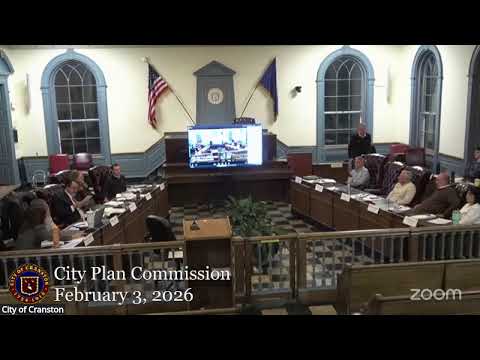
The City Plan Commission opened a public hearing on proposed amendments to Cranston’s subdivision regulations and fielded detailed public comment on checklist items that would ask developers to estimate the number of school‑age children and provide fiscal‑impact statements.
Planner Jonas summarized the package of changes prompted by state law and staff recommendations, including a new “oversized-lot” subdivision type, optional pre‑application meetings, a two‑year expiration for final-plan approvals, required cisterns for subdivisions without public water, clarified fees and a revised checklist for minor and major subdivisions. Staff told the commission the changes were intended to conform the city’s regulations to state law and to codify some practices (for example, curb‑to‑curb pavement restoration) previously imposed as conditions.
Many attendees objected to the new school‑impact and fiscal‑impact checklist items. “I strongly object to this,” said Christina Brown, who asked how a developer could reliably predict future household composition and warned that denying projects on the basis of potential children risked fair‑housing claims. Attorney Robert Murray urged staff and commissioners to remove or limit the requirements, arguing that school population has declined and that the city could be exposed to familial‑status discrimination claims if school‑capacity estimates were used to deny projects.
Other commenters said the proposed fiscal‑impact requirement would be expensive and burdensome — particularly for small or minor subdivisions — and asked that such studies, if retained at all, be limited to large projects. Planner Jonas and the chair said the intent behind requesting demographic and fiscal information was to provide data to municipal budgeting and schools, not as an automatic basis for denial.
Several commissioners and speakers suggested narrower application: require school and fiscal impact information only for major subdivisions or rezonings rather than routine minor subdivisions. Commissioners also raised operational questions about proposed fee increases, the process for applicant‑supplied materials, and whether the city should ensure an official stenographic record rather than rely solely on video.
After public comment and internal discussion, the commission voted to continue the regulations hearing to the March 3 meeting to allow staff to revise the draft language, gather comparative practices from other municipalities, and return with clarified thresholds for when fiscal and school‑impact submissions would be required.
The continuance gives staff time to consider legal and administrative concerns raised by residents and practitioners and to prepare alternate wording that distinguishes minor and major applications.