Subcommittee hears emotional testimony on 'born‑alive' bill, then passes motion to pass by indefinitely
Loading...
Summary
Sen. Sturdivant's SB548 would require equal care and hospital transfer for infants born alive after failed abortions; committee heard pro‑ and anti‑testimony focusing on moral duty, rarity of occurrence and possible legal ambiguity; an alternate motion to pass by indefinitely carried.
RICHMOND — The Senate health‑professions subcommittee on Monday debated SB548, a bill that would require clinicians to provide the same reasonably diligent care to infants born alive following a failed abortion as to any newborn of comparable gestational age and to take steps to transfer such infants to a hospital for further care.
Sen. Sturdivant framed the bill as codifying existing clinical practice in rare cases and said the measure would ensure equal care rather than mandate heroic measures. He cited limited data from six states that track such events to argue the occurrence is rare but real.
Witnesses in support included Dr. Michael Huffman of the Virginia Assembly of Independent Baptist, Jeff Caruso of the Virginia Catholic Conference, advocates from the Family Foundation and the Virginia Society for Human Life, and individuals who said they survived failed abortions. Supporters described the proposal as a moral and humane clarification that would protect infants who are born alive.
Opposition testimony came from the American College of Obstetricians and Gynecologists (ACOG) Virginia and Planned Parenthood Advocates of Virginia. Nicole Lauder of ACOG Virginia warned that the bill’s language could criminalize physicians who follow the standard of care — for example, when a fetus has no chance of viability or when a termination is nonelective — and described terms such as “take all reasonable steps to preserve life” as ambiguous and susceptible to individual interpretation. Planned Parenthood urged rejection as unnecessary or legally problematic.
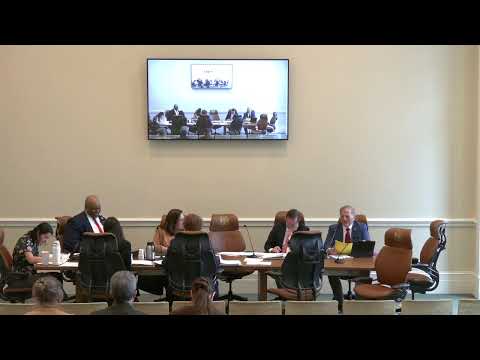
Committee members debated whether the bill would solve the problems described by supporters or instead impose unclear legal obligations on physicians. After questions and discussion, a motion to pass the bill by indefinitely (PBI) was called and carried by voice vote, with two senators recorded as opposing the PBI motion.
What happens next: The bill was effectively deferred by the committee; sponsors and opponents indicated continuing concerns that could be taken up in future drafting or floor action.