Get Full Government Meeting Transcripts, Videos, & Alerts Forever!
Get email alerts on the Sunshine Law topic
No spam. Unsubscribe anytime.
Pensacola advisory boards briefed on Florida Sunshine Law and public-meeting rules
Summary
Assistant City Attorney Grace Perola told Pensacola redevelopment advisory boards that Florida's Sunshine Law requires open meetings, reasonable notice and promptly recorded minutes; she said the rule applies to any gathering of two or more members to discuss matters that will foreseeably come before a board and described civil and criminal remedies for knowing violations.
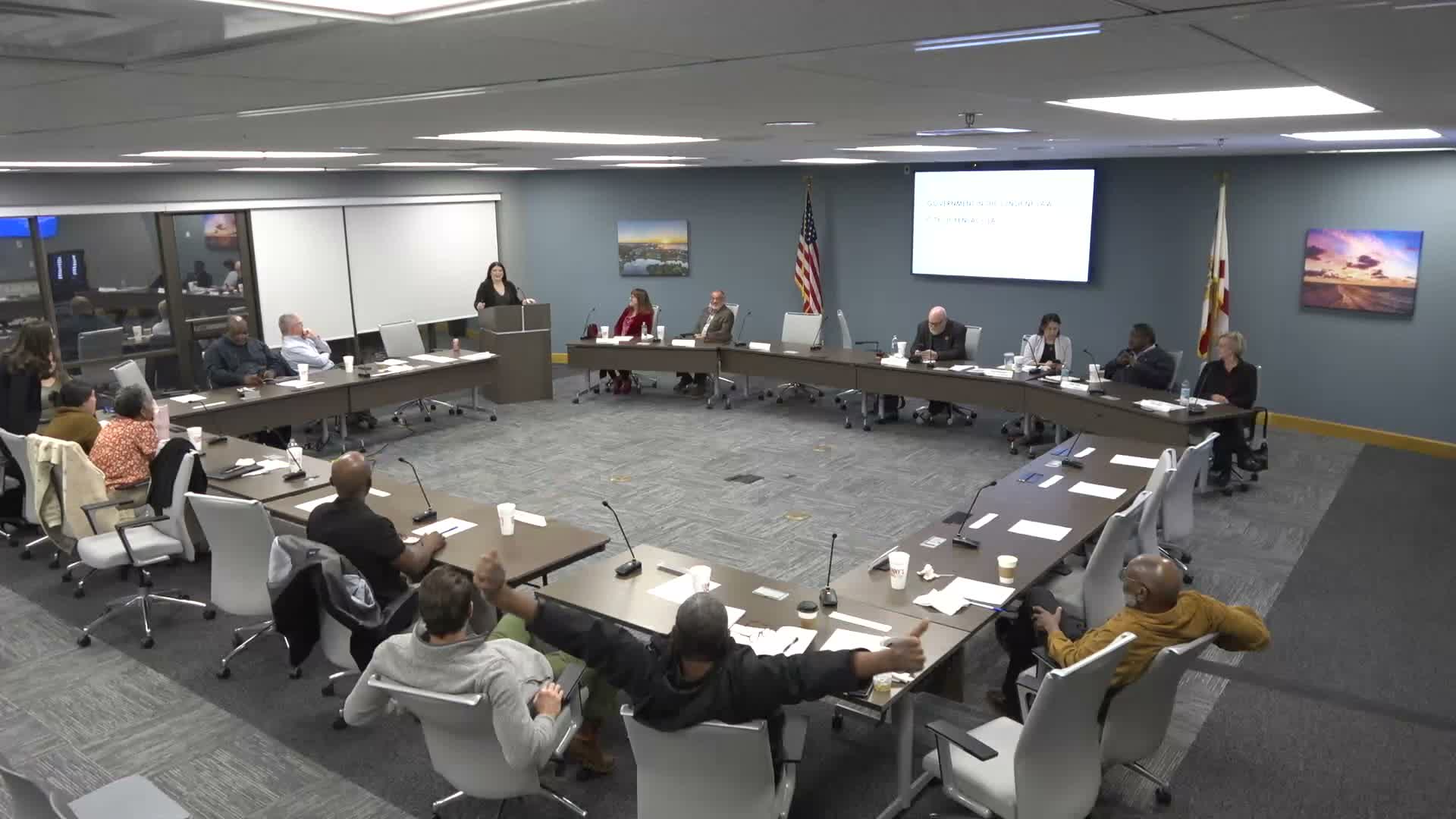
At a joint meeting of Pensacola community redevelopment advisory boards, assistant city attorney Grace Perola reviewed Florida's Sunshine Law, telling members the rule gives citizens "a right of access to governmental proceedings of public boards and commissions" and applies both constitutionally and by statute.
Perola said the law covers any gathering of two or more board members to discuss matters that will foreseeably come before the board for action and noted it reaches informal communications as well as formal meetings. "The Sunshine Law provides citizens a right of access to governmental proceedings of public boards and commissions," she said, and cautioned that using staff or nonboard members as liaisons can still trigger the law if it facilitates back-and-forth board discussion.
The presentation summarized three basic legal requirements: meetings must be open to the public, reasonable notice must be given, and minutes must be promptly recorded and available for inspection. Perola reiterated Attorney General guidance that publishing an agenda is prudent and recommended at least seven days' notice for regular meetings and 24'2 to 72 hours for special or emergency meetings.
Perola also described limits on private communications: board members should avoid private phone calls, virtual meetings or written exchanges (emails, texts, social media) that amount to a discussion of board business. She said purely informational one'way communications are less likely to trigger the law, but any exchange that invites comment or response is risky.
On remedies and penalties, Perola warned that a knowing violation can be a second'degree misdemeanor punishable by up to 60 days in jail and that a successful civil suit can produce injunctions, declaratory relief and an award of attorneys'fees. "A knowing violation of the sunshine law is a misdemeanor of the second degree, which means it can be punishable by up to 60 days in jail," she said, and noted noncriminal infractions carry fines up to $500 and that official actions taken in violation of the law may be void ab initio.
During a short question-and-answer period, Perola clarified that ex officio members are subject to Sunshine Law obligations regardless of whether they hold voting power and encouraged board members to contact the city attorney''s office with procedural questions. Organizers said they would distribute Perola's materials and the meeting slide deck to attendees.
The briefing closed with organizers asking participants to raise any remaining procedural questions by email so staff could follow up with written guidance and resources.