
Council delays ruling in Republic Services customer‑dispute after heated hearing; urges mediation
Get AI-powered insights, summaries, and transcripts
Subscribe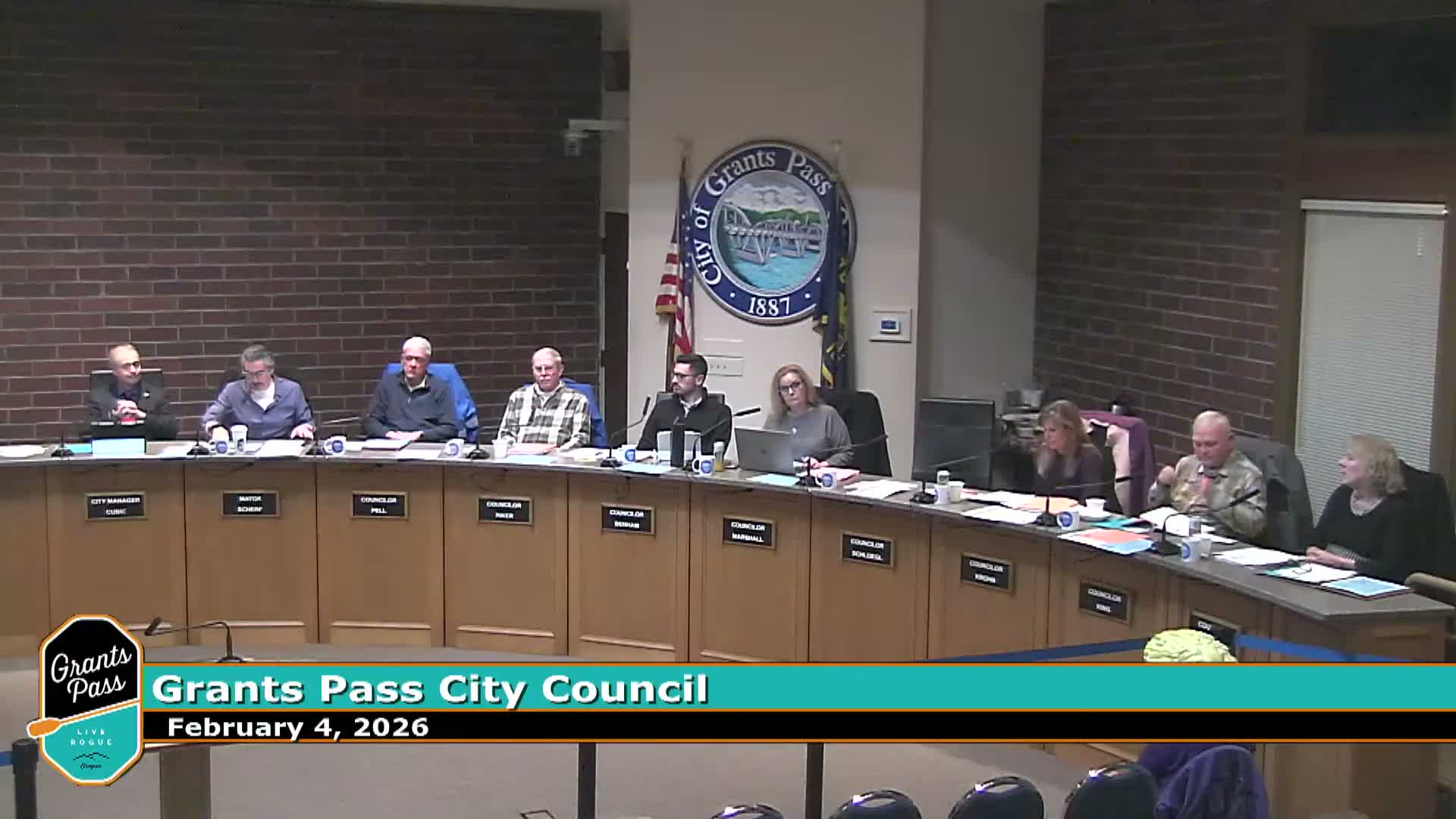
Summary
After a public hearing over a customer dispute between local hauler(s) and Republic Services, Grants Pass City Council voted 5–2 to postpone a ruling until March 4 and encouraged the parties to meet and mediate. The dispute centers on whether the complainant's activities fall under franchise exemptions for charitable reuse or contractor demolition.
The Grants Pass City Council on Feb. 3 deferred a decision on a customer complaint against Republic Services after a three‑hour public hearing that drew heavy testimony from the complainant, Republic Services, Southern Oregon Sanitation and community members.
The hearing addressed whether a local hauler and thrift operation (identified in the record as the complainant and sometimes referred to as "Mr. Kirkpatrick" or "Connor") qualifies for exemptions in the city's solid‑waste franchise that would let him haul material to the city‑leased transfer station. Staff framed the dispute around franchise exemptions 2.81 (charitable reuse) and 2.87 (contractor demolition/land‑clearing); the complainant also introduced exemption 2.89 (property cleanup/abatement) during the hearing.
Complainant's case: The complainant said his businesses — described in the record as a thrift nonprofit and a junk‑removal operation — regularly divert reusable items from landfill and that Republic Services and other transfer stations have unlawfully banned him from city‑owned facilities. He accused the franchisee of selective enforcement and retaliation, said his organizations have diverted nearly 952 mattress units (about 26 tons) from landfill in the past year, cited state recycling obligations and demanded the city order Republic Services to lift the ban within 48 hours or face remedies in the franchise contract.
Republic Services' response: Julie Jackson, municipal manager for Republic Services, told council the company does not believe the complainant meets the charity or contractor exemptions. Jackson said the charitable exemption applies to "reusable, repairable discards" that thrift stores collect for resale, not apparent truckloads of landfill‑bound solid waste, and that contractor exemptions require waste to be generated by the contractor's own construction/demolition activity and, for demolition, properly profiled for hazardous materials under DEQ rules. Republic also said the complainant had been banned from multiple facilities after years of operation and that the company is willing to negotiate specific arrangements (for example the mattress EPR program).
Public and industry comment: Representatives from Southern Oregon Sanitation and other waste‑industry participants said the Solid Waste Agency has reviewed similar claims at least three times and consistently concluded the complainant's typical loads do not meet the narrow exemptions. Multiple members of the public urged the council to consider customer access, local reuse efforts, and due‑process concerns when deciding whether to order relief.
Council action: After deliberation, Councilor Victoria moved to postpone the ruling to the March 4 meeting and strongly encourage the two parties to meet and attempt mediation beforehand; the motion passed 5–2. Council members noted the franchise and the city's complaint process allow either party to seek neutral binding arbitration if they disagree with a city decision.
Why it matters: The dispute raises competing aims built into Oregon's franchise model: (1) a regulated, exclusive hauler can offer consistent, regulated service and protect environmental reporting obligations; and (2) narrow exemptions in franchise agreements can preserve space for charitable reuse and for certain contractors to haul specific kinds of debris. Council's postponement reflects both the legal complexity and the community interest in balancing those aims.
Next steps: The council set a date‑certain return on March 4 and asked staff to encourage the parties to meet and to provide any additional documentation. If either party disputes the city's final ruling, the franchise agreement allows an appeal to neutral, binding arbitration.