Get Full Government Meeting Transcripts, Videos, & Alerts Forever!
Get email alerts on the Wastewater topic
No spam. Unsubscribe anytime.
Wastewater superintendent reports plant overloaded, 109 industrial pretreatment violations
Summary
Wastewater Superintendent Doug Massoon told council the plant treated about 836 million gallons last year, is operating over design CBOD capacity, reported 109 pretreatment violations among industries and plans Phase 2 expansion to address capacity.
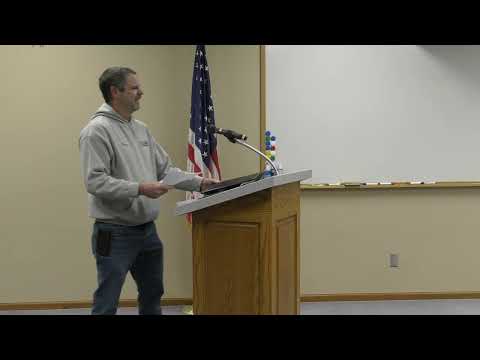
Doug Massoon, wastewater superintendent, presented the city's annual wastewater report to the council and warned the plant is operating beyond design capacity while staff proceed with upgrades.
Massoon reported the plant treated 836,000,000 gallons of wastewater over the past year, an average around 2,290,000 gallons per day. He said the plant operated at approximately 105% of its CBOD capacity and described the facility as "very overloaded." Despite that strain, Massoon reported the plant's final effluent discharged to the Floyd River did not exceed any pollutant limits on the monthly discharge monitoring reports submitted to the Department of Natural Resources.
The superintendent said the city's pretreatment program with industrial users produced 109 violations last year; the city issues monthly violation letters and imposes fines on industries that exceed limits. Massoon said staff responded to seven sewer calls, about 40 SCADA alerts last year and completed nearly 1,900 work orders to maintain equipment.
Massoon discussed biosolids management: the plant generated roughly 7,800,000 gallons of biosolids applied to nearly 600 acres of farmland across about five fields with four farmers rotating application to limit salt buildup. He said farmers are not paid for taking biosolids; the city manages rotation to avoid repeated application on the same field.
To address capacity issues, Massoon noted Phase 2 expansion will start in the spring when weather allows and Phase 3 is projected to go to bid in the fall. He also noted that some original facility concrete dates to 1955'56 and that mechanical components typically need replacement more frequently.
Why it matters: operating above design capacity can accelerate wear on equipment and increase maintenance costs. The council heard that expansions are planned to mitigate capacity and operational pressures.
Next steps: staff will begin Phase 2 expansion in the spring and return with timeline and budgetary details as projects progress.