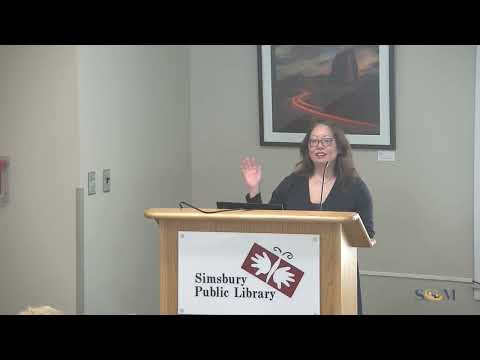
ALA president Maria McCauley visits Simsbury Public Library, calls libraries 'lifelines'
Loading...
Summary
Dr. Maria McCauley, president of the American Library Association, told a packed gathering at Simsbury Public Library that libraries 'support living, learning, and dying,' highlighted Cambridge programs on digital equity and makerspaces, and urged local engagement to defend intellectual freedom.
Dr. Maria McCauley, president of the American Library Association, spoke to staff, trustees, and community members at Simsbury Public Library, urging support for libraries as essential community anchors. "Our libraries support living, learning, and dying," she said, describing how patrons rely on library services in crises and everyday life.
McCauley recounted personal and patron stories — including a patron named Maura who used the library during recovery from brain surgery — to illustrate libraries’ roles as places of sanctuary and civic connection. Holly McGrath, president of the library board, introduced McCauley and summarized aspects of McCauley’s work in Cambridge, including increased branch hours and new service models.
Turning to concrete programs, McCauley described Cambridge Public Library’s investments in digital equity, a team of digital‑equity specialists and a digital navigator who completed 788 consultations in 18 months, and a social‑work partnership to support patrons and staff. She also noted the library’s makerspace and co‑produced program model: Cambridge hosts thousands of community programs each year, most produced with local partners to reach diverse audiences.
On staffing and planning, McCauley emphasized inclusive internal culture and staff supports such as trauma‑informed training and an internal staff support toolkit. She advised local libraries to use community feedback and planning data — for example, requests for expanded hours — to make cases for resources with town officials.
The session closed with audience questions about ALA resources, accessibility training and how to engage residents who do not currently use the library. A luncheon hosted by the library trustees followed the remarks.