Get Full Government Meeting Transcripts, Videos, & Alerts Forever!
Get email alerts on the Land Use Solar Siting topic
No spam. Unsubscribe anytime.
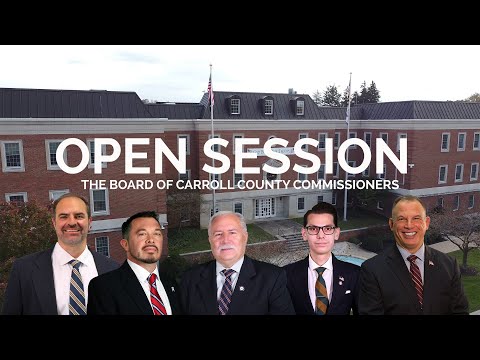
Carroll County commissioners review draft solar siting rules, direct staff to hold public hearing
Summary
Commissioners debated setbacks, height caps, screening, decommissioning and developer mitigation tied to a state "Mako" compromise bill; staff will revise the draft and the board moved to schedule a public hearing to solicit public comment.
Carroll County commissioners spent their meeting reviewing a draft set of solar siting and design requirements, debating setback distances, maximum panel heights, screening standards and decommissioning rules before directing staff to revise the text and schedule a public hearing.
The county’s planning director (identified in the transcript as Speaker 4) told commissioners that a state-level compromise being negotiated by a group described as “Mako,” state agencies and the solar industry accepts that the state can preempt where solar may be sited. Instead, the compromise would require solar developers proposing projects in identified priority preservation areas to contribute funds to local agricultural-preservation programs — staff summarized the contribution discussed in the transcript as roughly between $3,500 and $5,000 per acre (the exact phrasing in the transcript was ambiguous). Speaker 4 said the state position has shifted the debate from “where” solar can go to “how” jurisdictions can secure mitigations and design protections.
Why it matters: commissioners said the county may lack authority to prohibit solar where the state allows it, so local design standards (setbacks, screening, decommissioning) are being proposed now to protect visual corridors, farmland and neighbors until and unless state law changes. Staff emphasized that even if the state acts next spring, having local standards in place can be useful in the short term and can be amended later.
Major points discussed
- Setbacks: Staff recalled a planning work group's outlier recommendation of 400 feet, the planning commission’s recommendation of 200 feet and the state-level compromise of 100 feet (with an additional 150-foot buffer measured to the nearest residence). Commissioners debated choosing a standard that balances local preference with legal durability; multiple speakers favored preserving a planning-commission discretion to reduce setbacks (for example to 50 feet) when supplemental landscaping is provided, but with an absolute minimum to prevent incremental erosion of protections.
- Height limits: The draft originally carried a 20-foot cap discussed by the local work group; the Mako compromise proposes 15 feet except for agrivoltaics (farming under arrays), where the compromise text left the upper limit unclear. Commissioners and staff noted industry norms are often in the 10–15-foot range and discussed adopting a single numeric cap for certainty.
- Screening and buffers: Staff proposed a multilayered year-round landscape buffer and security fencing (minimum 6 feet) and recommended a 35-foot buffer width to align with the state compromise. Commissioners pushed for taller initial plantings (12 feet was suggested as a working target) or a berm-plus-planting combination to achieve effective, durable screening.
- Decommissioning and surety: The draft requires applicants to submit decommissioning plans, to restore sites to pre-development condition within 12 months of discontinuing operation or abandonment, and authorizes the county to hold a surety equal to 125% of estimated decommissioning costs (reviewed every five years). The transcript records a discussion about whether the abandonment trigger should be 6 or 12 months; staff noted the draft uses 12 months but that the state compromise may use a different threshold.
- Vegetation, glare and safety: Staff proposed native ground cover/pollinator habitat, a glare hazard analysis certified prior to installation, underground electrical connections where feasible and secure battery enclosures. The draft also includes sign requirements for emergency contacts at each entrance (dimensions discussed in the meeting ranged up to 24"x24" or ~4 sq ft).
Local projects and grandfathering: Staff identified two projects currently in development review — a small Westminster industrial-site project near the airport and a county project on the Delaney property off Cleese Mill — and advised that the board may choose grandfathering language so those projects are not adversely affected by any new code provisions.
Public process and next steps: After discussion, Speaker 6 moved to schedule a public hearing on the proposed solar site-design requirements and Speaker 1 seconded the motion (the transcript records the motion and second but does not show an individual roll-call or formal tally). Staff said they will revise the draft reflecting today’s direction, coordinate with the county attorney’s office, publish the updated materials and schedule the public hearing (staff estimated about three weeks to publish and notice). The board then completed other business and adjourned.
Representative quotes (attributed to transcript speaker labels):
- "They're trying to get the best compromise we can get," said Speaker 4, describing negotiations with state and industry representatives.
- "If it is going to be put down our throat, this is what it looks like," Speaker 3 said, characterizing the county’s choice to set local parameters while acknowledging state pressure.
- "We're making the best of a bad situation," Speaker 4 said near the meeting’s close.
What the board asked staff to do: revise the draft code to reflect the commission discussion (including clearer minimum setback language, screening standards and surety/decommissioning details), work with the county attorney to publish the revised draft, and schedule a public hearing so residents can comment.
Limitations: The meeting transcript uses numbered speaker labels (Speaker 1 through Speaker 7) rather than full names in the provided text. Quotations and attributions in this article use those speaker labels exactly as they appear in the transcript. Where the transcript wording was unclear (for example the developer contribution amount), the article notes ambiguity rather than asserting a corrected figure.
Next procedural step: Staff will supply an edited draft to the county attorney and publish materials for a public hearing; commissioners set the process in motion during the meeting.