Get Full Government Meeting Transcripts, Videos, & Alerts Forever!
Get email alerts on the Adequate Facilities Tax topic
No spam. Unsubscribe anytime.
Cannon County commissioners form review committee after residents question Adequate Facilities Tax
Summary
After multiple public commenters questioned the legality and fairness of Cannon County's Adequate Facilities Tax, commissioners voted to form a three-person committee to study the tax and return with recommendations in 30 days; the county attorney said the tax was lawfully adopted in 2019 and is frozen at 90¢ per square foot under a 2024 amendment.
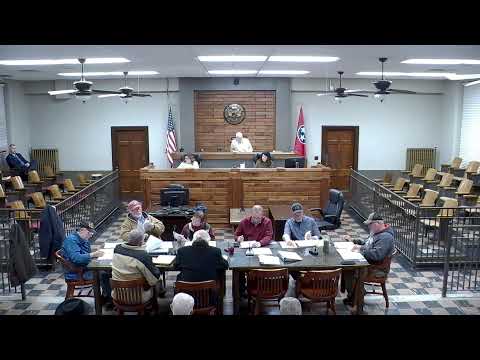
A majority of Cannon County commissioners voted to form a three-member committee to review the Adequate Facilities Tax (AFT) after a day of public comment and legal briefing on Feb. 5.
Residents and builders urged the commission to reconsider or repeal the AFT, arguing it rests on population-growth figures from the 1990s and imposes an unfair surcharge on homeowners and small contractors. "This tax is built on numbers from over three decades ago," said Daniel Wagner, a District 1 resident, adding that "the rate is 90¢ per square foot" and that he found no county filings showing the certification the 2024 law now requires. Wagner urged repeal or a local fix to avoid what he described as duplicate fees on families and builders.
County Attorney James told the commission the county lawfully adopted the AFT by resolution in 2019 after a Barrett Group study and a two-thirds board vote. He explained the state County Powers Relief Act requires 20% growth between the 1990 and 2000 censuses to adopt an AFT and a capital-improvement plan, and said the 2024 amendment to the state law tightened certification requirements but also grandfathered counties that had already adopted the tax. "You either repeal it or you can keep it," James said, adding that existing local enactments remain in effect at the frozen rate of 90¢ per square foot unless the county requalifies under current growth tests.
Commissioners heard a mix of views during the allotted public-comment period. John Taylor, of the 1st District, described the vote as a matter of legality and conscience and urged careful consideration. "Tonight, it's your turn," Taylor said. Other residents cautioned about the effect on senior homeowners; one commissioner pressed for protections for older residents who might face heavier tax burdens if they replace or rebuild homes.
After discussion about possible protections and legal limits, a motion to form an investigative committee to review the AFT, its legality and options was made, seconded and carried on a roll call recorded in the transcript as a 5–4 majority. Commissioners who volunteered to serve said they would consult the county attorney and return with findings and recommendations at the next regular meeting, roughly 30 days away.
The motion does not itself repeal or change the tax; the county attorney told the board the legal choices available under existing state law are to keep the AFT in place as adopted or to repeal it locally. Commission members emphasized protecting senior residents and exploring whether limited exceptions or local relief measures are possible within the law.
Next steps: the committee will review the legal record, the history of the 2019 adoption, the effect of the 2024 amendment and potential mitigation for affected homeowners, and report back to the full commission for a vote.