Get Full Government Meeting Transcripts, Videos, & Alerts Forever!
Get email alerts on the Ineffective Assistance Of Counsel topic
No spam. Unsubscribe anytime.
Tennessee appellate panel presses arguments over whether juvenile’s testimony reflected ineffective counsel
Summary
Attorneys argued before a Tennessee appellate court whether defense counsel’s decision to call 16-year-old Kevin Buford to testify and elicit admissions, and to reference a prior guilty plea, amounted to ineffective assistance that undermined the verdict. Judges focused on whether the appellate record is complete and whether any deficiencies caused prejudice under the Postconviction Procedure Act.
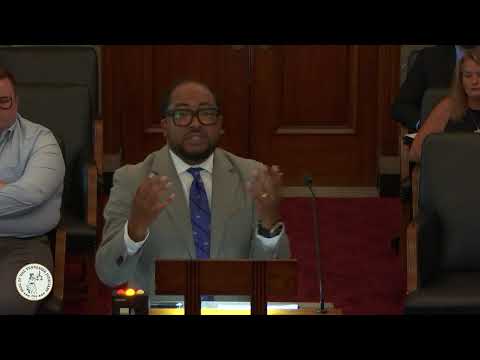
Kyle Parks, attorney for appellant Kevin Buford, told a Tennessee appellate panel that calling his then-16-year-old client to testify and eliciting admissions about a January 2008 shooting were grave errors that deprived Buford of effective counsel.
Parks said he reserved five minutes for rebuttal and argued that trial counsel Scott Wilder — who had been appointed about five months before trial — both solicited a confession on the stand and allowed the jury to learn of a prior guilty plea that had been withdrawn. "I've waited 11 years to do this," Parks said, urging the court to consider whether the cumulative effect of counsel’s choices undermined confidence in the verdict.
A member of the bench pushed back, noting that a recorded statement in which the petitioner admitted involvement had already been played for the jury and asking, "Where's the harm here?" Another justice framed the controlling legal question under the Postconviction Procedure Act: whether any claimed deficiencies in counsel's performance were sufficient to show constitutional error by demonstrating that the outcome would have been different or that confidence in the verdict is undermined.
State counsel, appearing in place of Abigail Orsby, urged affirmance of the post-conviction court's denial of relief. The state's presentation summarized the January 2008 facts summarized on the record: video placing Buford in the area of the shooting, a neutral bystander identifying him, a codefendant who identified him as the shooter, and a post-arrest admission to police. The state described trial counsel's work to cross-examine witnesses, call defense witnesses and "control the narrative," and argued there was no persuasive showing of prejudice that could have changed the jury's verdict: "We ask that you affirm the denial of post conviction relief," state counsel said.
The bench repeatedly returned to procedural limits posed by the record on appeal. Judges and both sides discussed whether the trial transcript and excerpts from the prior post-conviction proceedings are properly before the court; the bench indicated it could order the record supplemented or take judicial notice of court records if necessary. One justice observed that appellate review under the Postconviction Procedure Act is not a general fairness inquiry but instead requires a showing that counsel's failings were constitutionally deficient and prejudicial.
Parks described the defense theory presented at trial as an "undue influence" or mitigation-focused strategy tied to the petitioner’s relationship with his father and codefendants, and he faulted counsel for abandoning that presentation in practice: "He didn't ask questions to either of the people that testified against Mr. Buford regarding the duress that he said was going to be established," Parks said during argument. The state countered that, even if counsel pursued a sympathy-driven strategy or a "Hail Mary" appeal to the jury, that approach is not per se unreasonable when evidence is otherwise overwhelming.
The court did not announce a decision during the argument. Judges asked staff to locate missing portions of the record, and at oral argument the court said it would "figure out exactly what happened or where the record is." The matter remains under advisement pending any record supplementation and the court’s written opinion.