Get Full Government Meeting Transcripts, Videos, & Alerts Forever!
Get email alerts on the Criminal Procedure topic
No spam. Unsubscribe anytime.
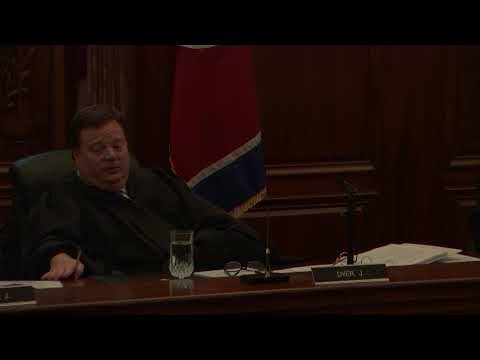
Appellate panel hears challenge to suppression in DUI case over affidavit hearsay
Summary
An appellate panel heard arguments over whether a trial court erred in suppressing evidence after a DUI arrest, focusing on whether a line in the arresting officer's affidavit quoting the suspect was inadmissible hearsay under Smotherman and whether the affidavit nonetheless established probable cause.
An appellate panel heard oral argument about whether a trial court erred when it granted a defendant's motion to suppress evidence in a DUI-related matter. State counsel Lacey Wilber urged the court to reverse, saying the affidavit supplied probable cause even without a contested line that the suspect "stated he had consumed alcohol prior in the night." Defense counsel Drew Justice defended the trial court's suppression order and argued the affidavit was unreliable and layered with hearsay.
Why it matters: the case tests the boundary between an affidavit's face language and the Smotherman line of authority that requires an affidavit to identify when information is supplied by other officers. The outcome will affect how magistrates evaluate warrant affidavits that include reported admissions and whether a reviewing court may infer the source from surrounding affidavit language.
The facts recited by the state included a late-night collision—the suspect told the affiant he had been driving at about 02:33 a.m., then t-boned another vehicle at a high rate of speed, killing the other driver. The affidavit reported bloodshot, watery eyes and slowed speech, and it noted the suspect refused to provide a blood sample. Wilber told the panel the defendant later testified at the suppression hearing that he had consumed alcohol and that he had “drank approximately 9 beers that evening.”
The legal dispute centers on one affidavit sentence reported in a preprinted response field: that the suspect "stated he had consumed alcohol prior in the night." The trial court, after initially denying the suppression motion, granted reconsideration and excluded that sentence as hearsay because the affidavit did not identify who supplied the reported admission. The state contends that the affidavit otherwise shows probable cause—pointing to the high-speed crash, officers' observations of excessive speed, physical signs of impairment, and the refusal of the blood test—and that the trial court erred in excluding the line or in treating it as fatal to probable cause.
Defense counsel urged a narrower reading. Drew Justice argued the affidavit contained no field sobriety tests, no clear indicators of slurred speech or unsteady footing in the affidavit text, and no explicit identification that a law-enforcement officer supplied the admission, which defense counsel said meant Smotherman was not satisfied. Justice also urged the court to view the affidavit as containing multiple levels of hearsay—asserting the record suggested the admission passed from an EMT (Clintworth) to medical personnel and then to police—so the affidavit's single-sentence phrasing was misleading. He further argued the affidavit may have been recklessly drafted and cited United States v. Jacobs for the proposition that reckless omissions or misleading averments can warrant suppression.
The panel’s questions probed two lines of inquiry: (1) whether the four corners of the affidavit permit an inference that the affiant personally obtained the admission or that other officers were the source (the Smotherman issue), and (2) whether sufficient probable cause existed apart from that single sentence. Judges observed that excessive speed plus a horrific crash can be relevant to impairment in the totality of circumstances but pressed counsel on whether speed alone is probative of intoxication in the absence of other indicia.
The court did not render an immediate decision from the bench at the conclusion of argument. The panel recessed and indicated the docket will continue at 09:30 the following morning.