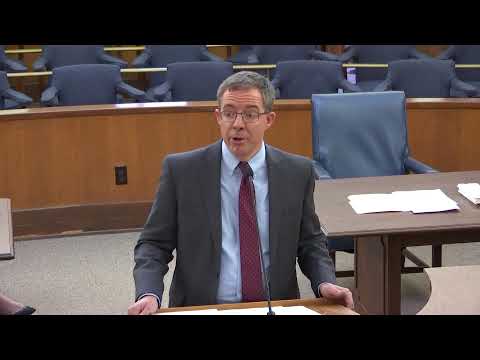
Appeals panel hears challenge to Christopher Thompson's post-conviction denial, defense cites ineffective counsel and involuntary plea
Loading...
Summary
In an appellate oral argument, defense attorney Melinda Meddor asked judges to reverse a post-conviction court's denial for Christopher Thompson, who pleaded to second-degree murder and drew a 20-year sentence; the defense argued counsel was ineffective and the plea was involuntary, while the state said the record does not support relief.
An appellate panel heard oral arguments in a challenge to Christopher Thompson's post-conviction denial, where defense attorney Melinda Meddor argued Thompson's conviction should be reversed because he received ineffective assistance of counsel and entered an involuntary plea. Thompson pleaded guilty to second-degree murder and received a 20-year sentence.
Meddor told the panel that the case's facts are unusual: Thompson and family members lived intermittently in a trailer and tent at an encampment near Garrett Lake in Wigley County. She described an altercation in January 2022 in which Thompson said he pushed his niece, who hit her head on a metal box and later was found dead. Meddor said Thompson admitted burying the body on the property but never admitted intentionally killing the woman and maintained his innocence until the courtroom plea.
"He maintained his innocence the entire time," Meddor said, adding that "I didn't mean to kill her. That sounds like manslaughter to me." She argued trial counsel failed to pursue plausible defenses, including that other occupants of the trailer (the wife and the brother) may have been responsible, and that counsel's approach left Thompson with the impression he had no realistic trial option.
The state, through attorney Kirby May, told the panel the record available to the court is incomplete. May said the transcript lacks the plea colloquy and other investigation materials and emphasized the high burden a petitioner must meet in post-conviction proceedings. "We do not have the plea colloquy," May said, and noted the plea agreement included the defendant's statements that he was entering the plea voluntarily and that his actions were not the result of threats or promises.
May argued trial counsel negotiated with the state and met with the defendant repeatedly, and that the record the panel does have shows counsel advised the defendant and prepared for trial even while recommending acceptance of the state's offer. The state asked the panel to affirm the post-conviction court's denial.
Meddor used rebuttal time to formally request that the appellate court reverse the lower court's ruling. The transcript ends with the panel closing the docket; no decision was announced on the record in the provided transcript.
The appeal centers on whether the post-conviction record—particularly the plea colloquy and underlying investigative materials—supports Thompson's claim that his counsel's performance and the voluntariness of his plea warrant relief. The panel's decision will turn on the sufficiency of the existing record and whether Thompson met the clear-and-convincing standard the state says is required.