
Local prevention panel hears lab warning on fentanyl-laced counterfeit pills, testing gaps
Get AI-powered insights, summaries, and transcripts
Subscribe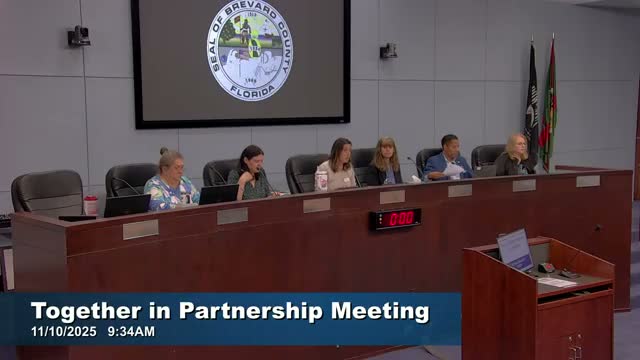
Summary
At a Nov. 10 Brevard County TIP meeting, a Genesys Reference Labs toxicologist warned that counterfeit pills and quasi‑legal products (kratom, Delta‑8, tianeptine) often contain fentanyl or other undetected substances and that common point‑of‑care drug screens miss many of them.
Scott Legacy of Genesys Reference Labs told members of a Brevard County prevention planning group on Nov. 10 that the local drug supply has shifted from prescription opioids to illicit fentanyl and increasingly complex polysubstance mixes, and that many popular retail products can contain potentially lethal amounts of fentanyl.
Legacy walked the group through the evolution of opioid-related deaths, saying prescription opioid volume peaked around 2011 even as deaths continued to rise, then heroin and later fentanyl became the principal drivers of fatal overdoses. He cited a 2019 Massachusetts study finding that just 1.3% of overdose toxicology results matched patients’ PDMP prescription records, evidence he said suggests illicit supply—not prescriptions—now accounts for most fatalities.
The presenter pointed to recent DEA seizure data and public dashboards showing counterfeit pills marketed to look like prescription Adderall or oxycodone can contain fentanyl at potentially lethal doses. “Seven out of the 10 pills that the DEA seized contain a potentially lethal dose of fentanyl if you were not used to taking opioids,” he said, and showed images comparing authentic tablets with counterfeit versions.
Legacy also reviewed emerging ‘‘quasi‑legal’’ products sold in smoke shops, vape retailers and some gas stations—kratom, semi‑synthetic cannabinoids (Delta‑8), tianeptine and designer benzodiazepines—and warned that many are not captured by standard point‑of‑care tests. He told the group that common cup‑style screens are designed to detect traditional opioids (morphine, heroin, codeine) at certain thresholds and frequently miss fentanyl analogs, tianeptine, kratom alkaloids and novel benzodiazepines. “You can absolutely be high as a kite on it, and that cup wouldn't say anything,” he said.
Asked about local policy options, Legacy said most regulatory action has been at the state level; he was unaware of county or municipal lists of controlled substances and suggested scheduling a compound is typically the route to restricting interstate commerce and sales. Several members described local retail availability near schools and a reported youth overdose after a gas-station purchase; Legacy said enforcing existing age or sales restrictions could be a place to start but that statewide scheduling often drives meaningful legal control.
Legacy urged agencies to subscribe to available surveillance systems (Florida FROST, the Florida Medical Examiners report, CFSRE, SUDORS, DEA alerts) and to treat forensic‑level lab confirmation as the gold standard where point‑of‑care cups are insufficient. The presentation concluded with a request from the chair that the slides and resource links be circulated to members.
The meeting’s discussion emphasized both public‑safety urgency—given the increased lethality of counterfeit pills—and practical constraints: standard quick tests miss many modern threats, and responding will likely require combined public‑health education, targeted enforcement, and wider access to definitive testing.