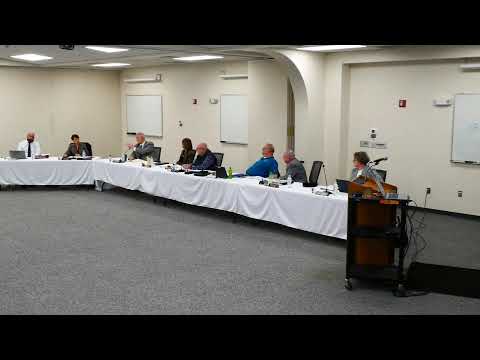
Iredell Health System says buying Davis hospital protected jobs, outlines behavioral‑health and residency plans
Loading...
Summary
John Green, president and CEO of Iredell Health System, told the Iredell County Board of Commissioners the system purchased Davis hospital to prevent an imminent closure, protecting about 100 jobs, and described steps to expand behavioral‑health follow‑up care, pursue a psychiatry residency, and reinvest in local services.
John Green, president and CEO of Iredell Health System, told the Iredell County Board of Commissioners that his nonprofit bought Davis hospital after its prior owner signaled an imminent closure, a move he said protected about 100 jobs and preserved roughly 12,000 patient days.
Green said the board moved quickly to complete the sale within a 90‑day window set by the seller and accepted early losses to keep behavioral‑health services in the community. “As a local nonprofit, we took the risk on to say it's gonna be our job to take that and we know we're gonna lose money in the first year,” he said. “But it's the right thing to do.”
The presentation underscored how the hospital system is investing in local access and workforce. Green reported Iredell Health System has 42 inpatient behavioral‑health beds at the acquired facility and has started outpatient follow‑up visits scheduled at seven, 14 and 21 days to prevent gaps in care after discharge. He said the system is exploring a psychiatry residency program and already operates an internal medicine residency, now in its second year, which he described as a pipeline to retain physicians locally.
Green also highlighted quality credentials and new technology: the system has earned four consecutive ‘A’ Leapfrog ratings, uses DNV (Det Norske Veritas) accreditation with ISO‑style continuous‑improvement processes, and added robotic devices for surgery. He reported roughly 650 robotic procedures last year — about 10 percent of the hospital’s surgeries — and said the board approved a sixth device for prostate procedures.
On operations, Green said the main emergency department’s registration‑to‑discharge time is now about three hours (the statewide average cited was about 3 hours 15 minutes), and the Mooresville urgent‑care site logged about 25,000 visits last year. He gave staffing and scale figures: the system grew from about 1,900 to 2,250 employees and from 36 to 45 locations; he said the system’s reported economic impact rose to about $238 million.
Commissioners asked about funding for facility renovations and partnerships with the U.S. Department of Veterans Affairs. Green said the system is pursuing state funding and grants but noted that many grants do not pay for bricks‑and‑mortar work. He said internal medicine residents rotate through the VA as part of training and that psychiatry residency planning is in early stages.
The presentation concluded with Green emphasizing the system’s intent to remain an independent hospital when financially sensible and to reinvest earnings locally. He opened the floor to questions and thanked the board for local support.