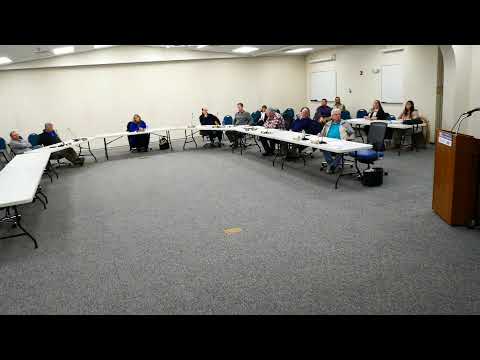
Planning board unanimously recommends short‑term rental text amendment after public concerns over parties, enforcement and taxes
Loading...
Summary
After public testimony about noise, septic problems and unregistered rentals, the Iredell County Planning Board voted unanimously Feb. 4 to recommend a short‑term rental text amendment to the county commissioners; staff and the county attorney said enforcement remains complaint‑driven and penalties escalate for repeats.
The Iredell County Planning Board unanimously approved Feb. 4 a recommendation that the Iredell County Board of Commissioners adopt a text amendment governing short‑term rentals (STRs), following a second reading and extensive public comment.
Staff presented the second reading of the amendment and asked the board to vote. County Attorney Lisa Valdez, who recused herself from voting because of a stated conflict, told the board that the draft keeps enforceable rules in place even where it removes a permit requirement: “Just because there’s not a permit doesn’t mean that there aren’t rules,” she said.
Several residents testified during public comment, describing problems they attribute to unregulated short‑term rentals on and near Lake Norman. Jack Benyon, co‑chair of a multi‑community group focused on STR issues, asked how the county would identify STRs, enforce occupancy taxes and track structural changes (additional bedrooms or bathrooms) made without permits. He also cited environmental and boating‑safety concerns and said local counts of STR listings appeared significantly higher than the county’s published number.
Resident Frank Johnson described repeated disturbances from a neighborhood STR — loud parties, blocked driveways and mailboxes, suspected drug activity and a reported theft — and said a nearby VRBO listing advertised sleeping space for far more guests than tax records or the property’s bedroom count suggest. He urged permitting, inspection and enforcement to protect neighborhood quality of life.
Valdez and planning staff explained enforcement will remain largely complaint‑driven: neighbors contact the planning department, staff investigates alleged zoning violations and can issue notices, citations and escalating penalties; unresolved matters can be referred to the county attorney and, in rare cases, to court. Staff noted the county previously increased penalties to discourage repeat offenders, and described a structure in which initial penalties are smaller and repeat violations can trigger daily accruals (staff discussed $200 initial fines and $500/day for continuing or repeat violations as presented).
A board member asked about pending litigation; Valdez said two lawsuits are still pending with no developments since the prior meeting. The board voted to recommend adoption of the amendment and signaled the item will go to the county commissioners for final action on March 3, 2026, at 6 p.m.
The board’s action does not itself change enforcement practice; the amendment and any final rules will be implemented by the planning department and enforced through complaint processes and penalties as set by the county.